In this article
- 1 How to care for Apoballis: Care tips for houseplants
- 1.1 Apoballis care: 10 expert tips for growing it successfully
- 1.2 Apoballis care
- 1.2.1 Light & Placement
- 1.2.2 Water
- 1.2.3 Fertiliser
- 1.2.4 Temperature & Humidity
- 1.2.5 Soil & Repotting
- 1.2.6 Pruning
- 1.3 Propagating Apoballis
- 1.4 Most common pests and diseases on Apoballis
- 1.5 Is Apoballis toxic for your pets or children?
- 1.6 Buy Apoballis online at PLNTS.com
How to care for Apoballis: Care tips for houseplants
Welcome to the world of the Apoballis!
The Apoballis is a tropical plant from the Araceae family, naturally found in the shady, humid rainforests of Southeast Asia. This plant family is known for its beautiful, glossy leaves that come in different shades of green and purple, making it a real eye-catcher in your home. The Apoballis adapts easily to indoor conditions and feels right at home in a little warmth and indirect light. Whether you are an experienced plant lover or just curious about adding some greenery to your space, the Apoballis is definitely a plant family worth discovering!
Fun fact! The Apoballis isn’t just pretty to look at—it also helps purify the air in your home. Another great reason to give it a spot!
Apoballis care: 10 expert tips for growing it successfully
- Place your Apoballis in a spot with plenty of soft, indirect light. She doesn't like direct sunlight, so make sure she is in the shade but still gets enough light!
- Water her when the top layer of soil feels dry. In the summer, she can have a good drink once a week, but in the winter, you can let her rest and water her every two weeks.
- A little plant food works wonders! Feed her in the spring and summer to help her grow strong and develop those beautiful, glossy leaves. In winter, you can give her a break.
- The Apoballis loves warm temperatures between 18-29°C. Make sure it doesn't get cooler than 10°C because that's something she really doesn't like!
- This plant loves a bit of extra humidity, just like in a tropical rainforest! Keep the humidity between 60-80%. In winter, you can use a humidifier, place her on a tray of water, or mist her lightly.
- Make sure you use light, well-draining potting soil. Repot her every 2-3 years or when her roots start to feel cramped.
- Trim off any old leaves every now and then so your Apoballis stays nice and fresh. A clean, sharp knife and you are good to go!
- Want more Apoballis in your home? Try propagating with division cuttings! Place them in water or soil, and after a few weeks, you will have a new little plant to enjoy.
- Check her occasionally for tiny pests like spider mites. Make sure she has good air circulation and don't overwater; this helps keep the pests away.
- Your Apoballis is toxic to pets and kids! The sap can cause irritation for some people, so it is a good idea to wear gloves when handling her. Just be cautious to avoid any discomfort!
Apoballis care
Light & Placement
Your Apoballis loves a spot with bright, indirect light. Too much direct sunlight can quickly burn her leaves, so it is better to keep her out of the harsh sun. Place her near a window with curtains, so the light filters through, or choose a spot with some shade. In short, a quiet corner with plenty of indirect light is the perfect spot for this tropical beauty!
Water
Watering your Apoballis is pretty simple, but you will need to keep an eye on her. She likes slightly moist soil, but her roots can quickly rot if they sit in stagnant water. Always wait until the top layer of soil has dried out before watering again. In the summer, when the plant is actively growing, you can water her weekly, but in the cooler months, watering every two to three weeks is just fine.
The key is to feel the soil: stick your finger about 2-3 cm into the soil. If it feels dry, it is time for water. If it is still a little moist, wait a little longer. Make sure the pot has good drainage, so excess water can drain out, and the roots won’t sit in water. Too much water can lead to root rot, so it is better to water a bit less often than too much. Let the soil dry out between waterings, and your plant will thank you!
Fertiliser
Fertilizing can make a big difference in how well your Apoballis grows. Using PLNTS plant nutrition gives her the nutrients she needs to grow strong, colorful, and glossy leaves!
In spring and summer, when she is growing, feed her every 2-4 weeks to keep her healthy. In fall and winter, when she is resting, she needs less food. You can reduce the amount or stop feeding for a while to avoid overfeeding.
Always follow the instructions on the packaging to make sure you are giving her the right amount of nutrition!
Temperature & Humidity
Your Apoballis loves warmth! The ideal temperature range is between 18-29°C. This keeps her feeling happy and growing well. Avoid temperatures below 10°C, as that can harm the plant. Also, watch out for temperatures above 32°C, as extreme heat can cause heat stress and make the leaves wilt or make the plant feel sick.
She is also a big fan of high humidity! In her natural habitat, the air is always moist, so make sure the humidity in your home stays between 60-80%. If the air is too dry (which often happens in winter), you can consider using a humidifier or placing your Apoballis on a pebble tray with water.
Expert tip: A light misting can also help provide the necessary moisture. But be careful: too much moisture can lead to mold or mildew issues, so try to keep a good balance!
Soil & Repotting
Apoballis likes moist, well-draining soil that is rich in nutrients, ideally with a slightly acidic to neutral pH. To keep the soil airy and to help water drain properly, you can mix the PLNTS potting soil with some perlite. This allows the roots to breathe and prevents water from building up, which could cause root rot.
Although Apoballis isn’t a super-fast grower, she will occasionally need more space. It is a good idea to repot her every 2-3 years, especially if you notice the roots are coming out of the pot or if the pot is becoming too small. Choose a pot that is just slightly bigger than the previous one— this will give the roots more room to grow and keep your plant happy!
Pruning
Your Apoballis is a plant that should not be neglected—she is a real showstopper! To keep her looking her best, she will need a bit of care from time to time. One thing you can do is prune her. While this plant naturally has a neat form, it helps to remove any old, wilted, or damaged leaves. This not only gives her a tidier appearance but also helps keep the plant healthy!
Expert tip: Use a clean, sharp knife or scissors to remove old or damaged leaves. Always cut close to the base, near the stem, and be careful—she doesn’t grow super quickly, so you won’t need to prune too much!
Propagating Apoballis
Propagating by division is a super easy way to make a baby plant. There are other methods, but we recommend this one! All you need is a healthy, mature plant and a little patience. Here is how to grow a baby Apoballis:
- Gently pull the plant out of the pot and check out the roots. Look for spots where the plant naturally splits into sections.
- Gently separate the roots a bit. Make sure each new section has enough roots and leaves to keep growing strong.
- Quickly plant the new sections into pots with fresh soil. Be careful not to damage the roots.
- Give the new plants some water so the roots can settle in. Place them in a spot with bright, indirect light so they can recover without the harsh direct sun.
And voilà, you have got a brand-new Apoballis to enjoy!
Most common pests and diseases on Apoballis
Your Apoballis might sometimes deal with pests like spider mites, which leave little white spots on the leaves, or powdery mildew, which shows up as powdery patches. Too much moisture in the air can also cause mold or powdery mildew. To keep your plant happy, make sure there is good air circulation, water it properly (but don't overwater!), and check for pests regularly. Clean the leaves occasionally to prevent issues and to keep your Apoballis healthy!
To tackle pests or mold, mix 1 capful of neem oil, half a capful of liquid soap, and 1 liter of water. Spray the mixture evenly on both sides of the leaves. Repeat this treatment weekly until the spots disappear.
Expert tip: Always test the mix on a small part of a leaf first to make sure your plant reacts well!
Is Apoballis toxic for your pets or children?
The Apoballis is toxic to pets and small children. While it usually doesn't cause serious problems, it can cause some irritation. Like many plants from the Araceae family, it is a good idea to be cautious. The sap can cause skin irritation for some people, so it is a good idea to wear gloves when handling it. Just be mindful around plants to avoid any surprises!
Buy Apoballis online at PLNTS.com
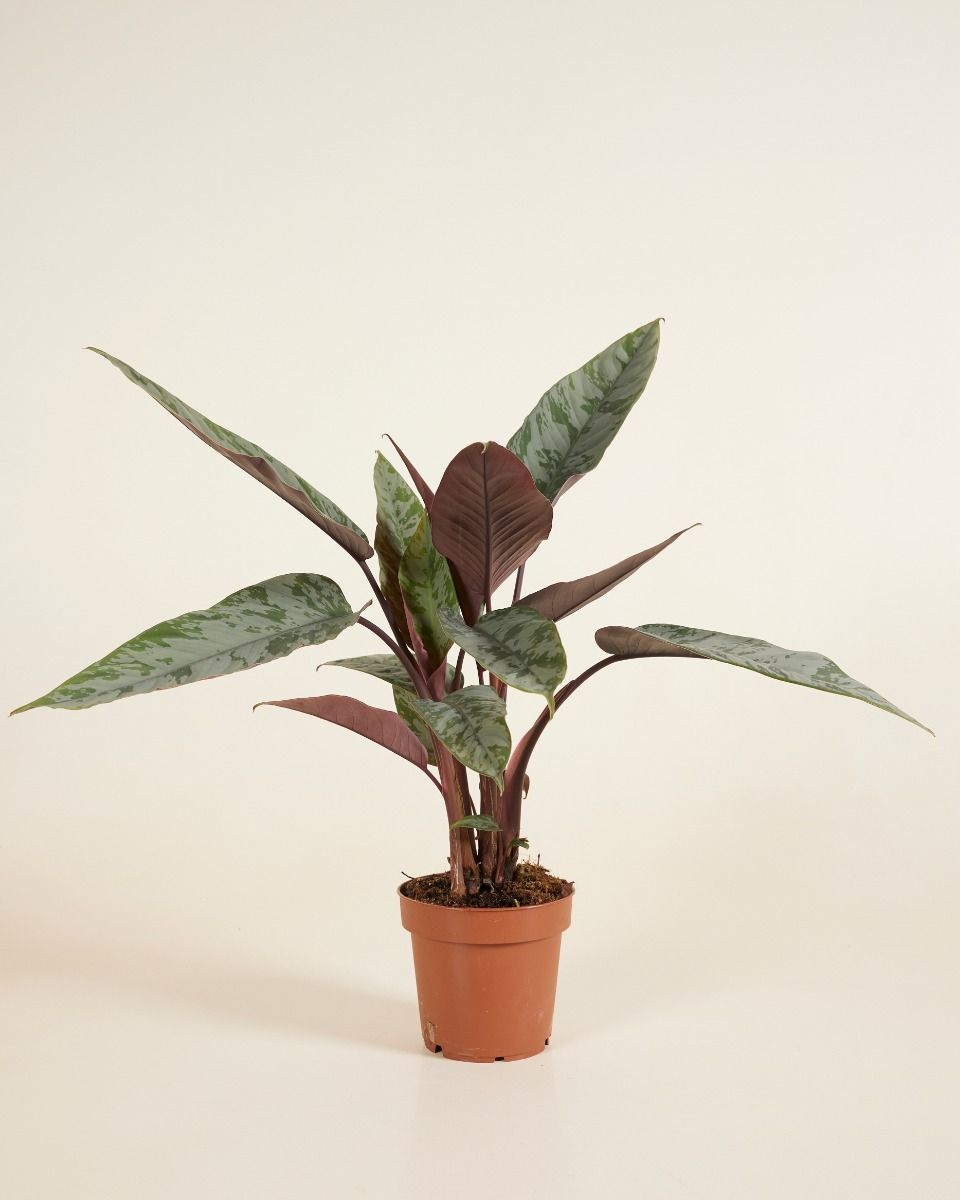
Now that you know everything about this lovely plant family, it is time to get your own! Apoballis is the perfect choice if you are looking for a beautiful and low-maintenance plant. Whether you go for the stunning Acuminatissima or another variety in this unique family, you are getting a plant that is super easy to care for. Its striking sword-shaped leaves with a purple shade on the back make it a standout feature in your home. Plus, it does great in a terrarium! With its tropical vibe, Apoballis will add that extra touch to your decor. Don’t wait too long, buy Apoballis online at PLNTS.com!

Emma
Emma is a botanical enthusiast with an unwavering desire to share her extensive knowledge about plants with you. She's always delighted to answer your questions, provide care tips, and guide you to find the perfect plant for your space.
March 03, 2026