Plant of the Month
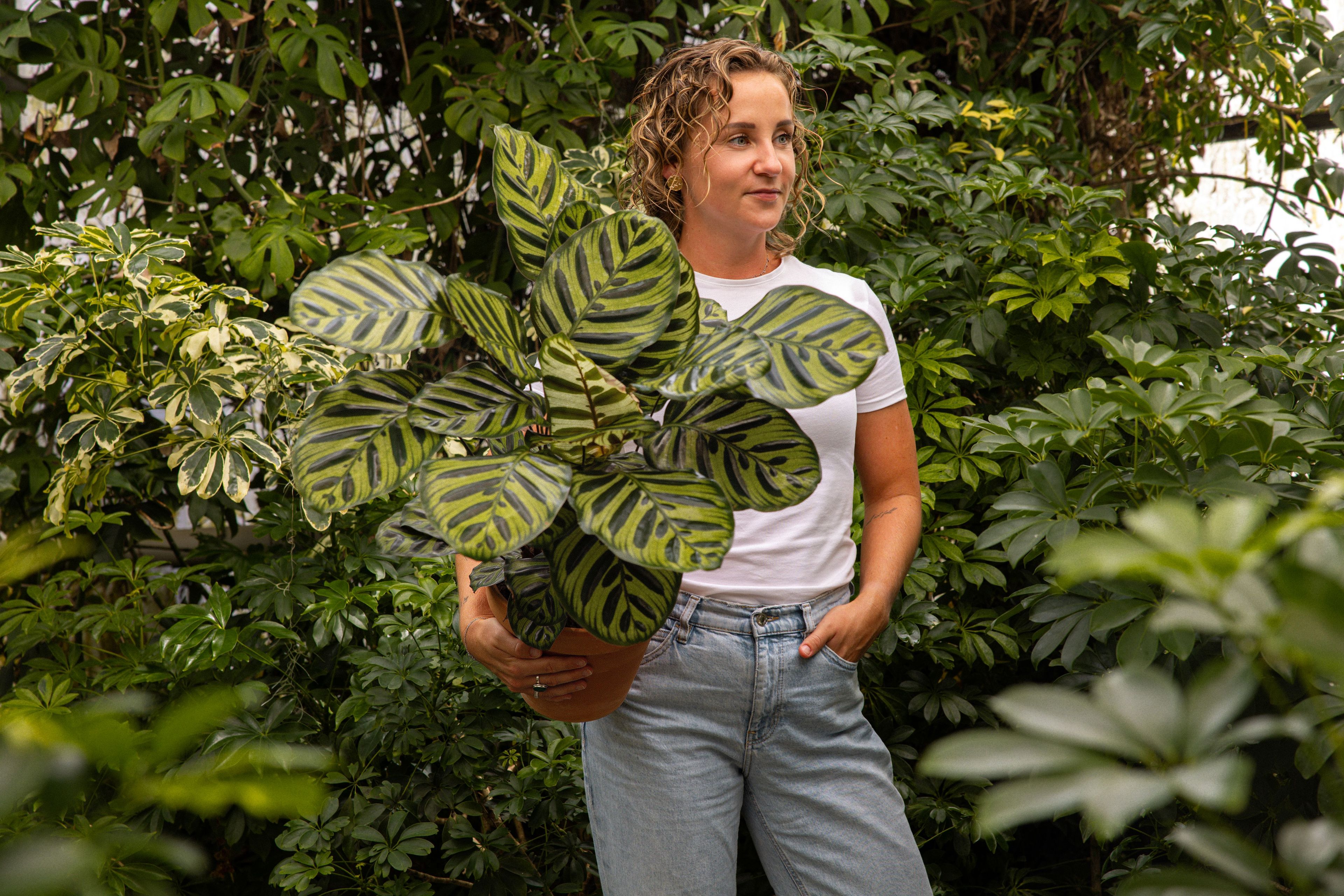
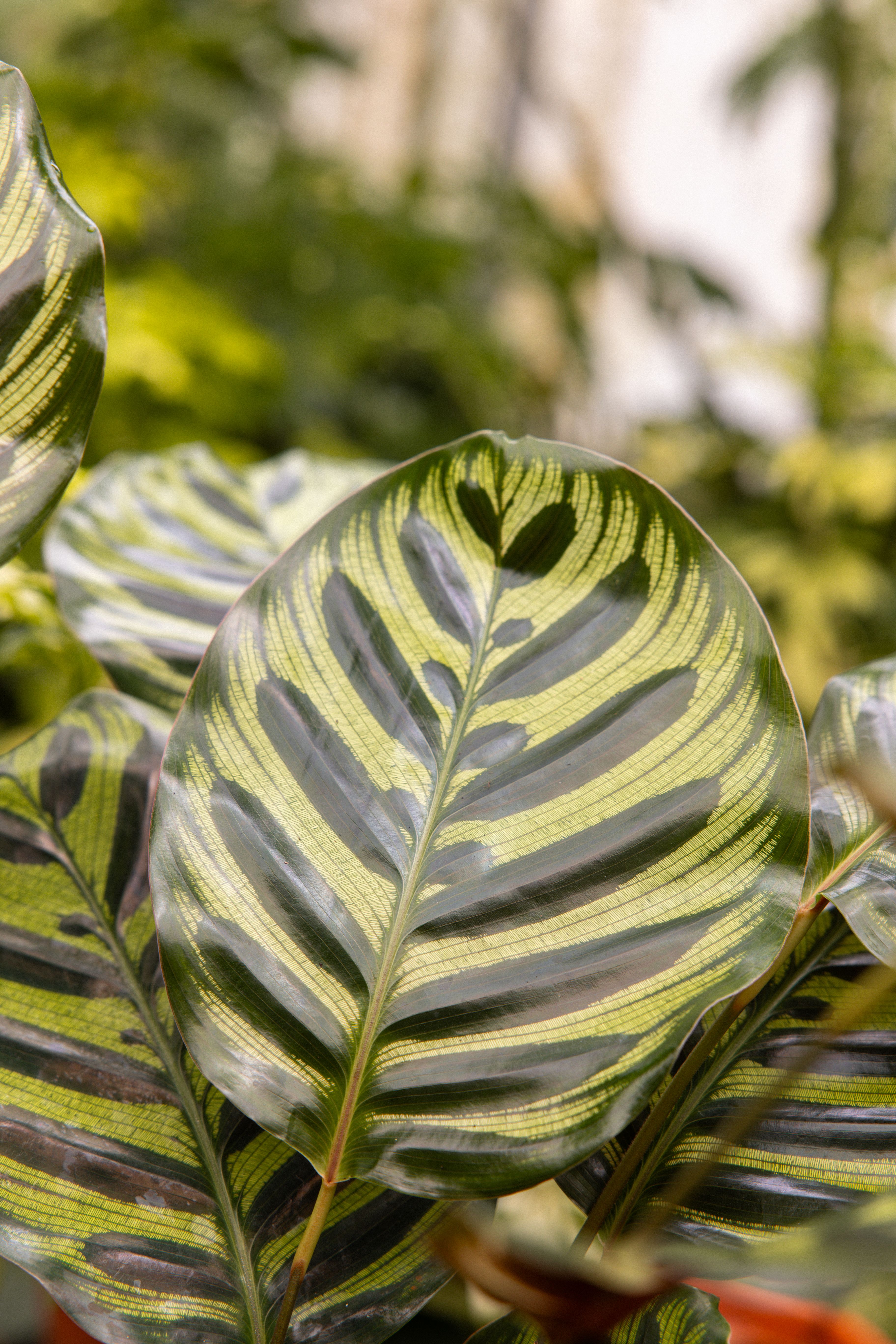
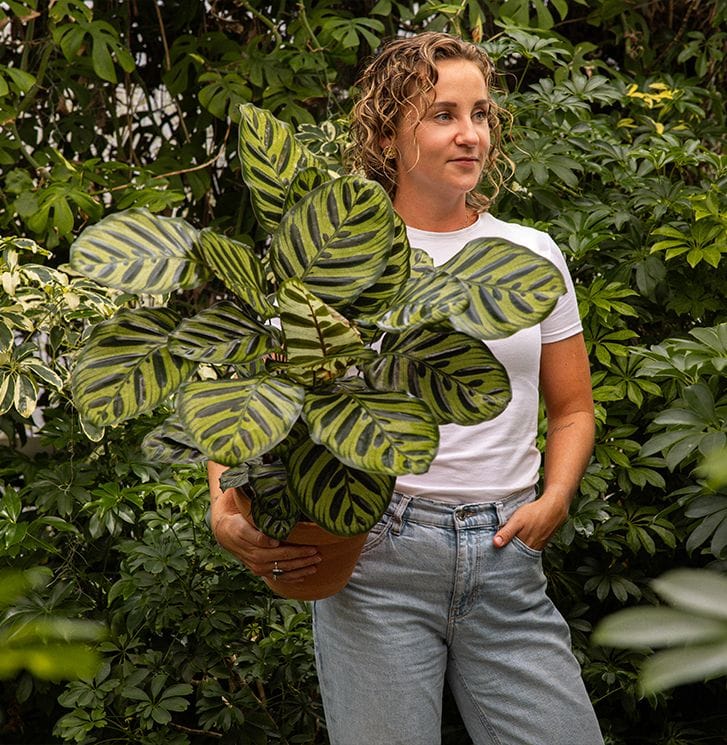
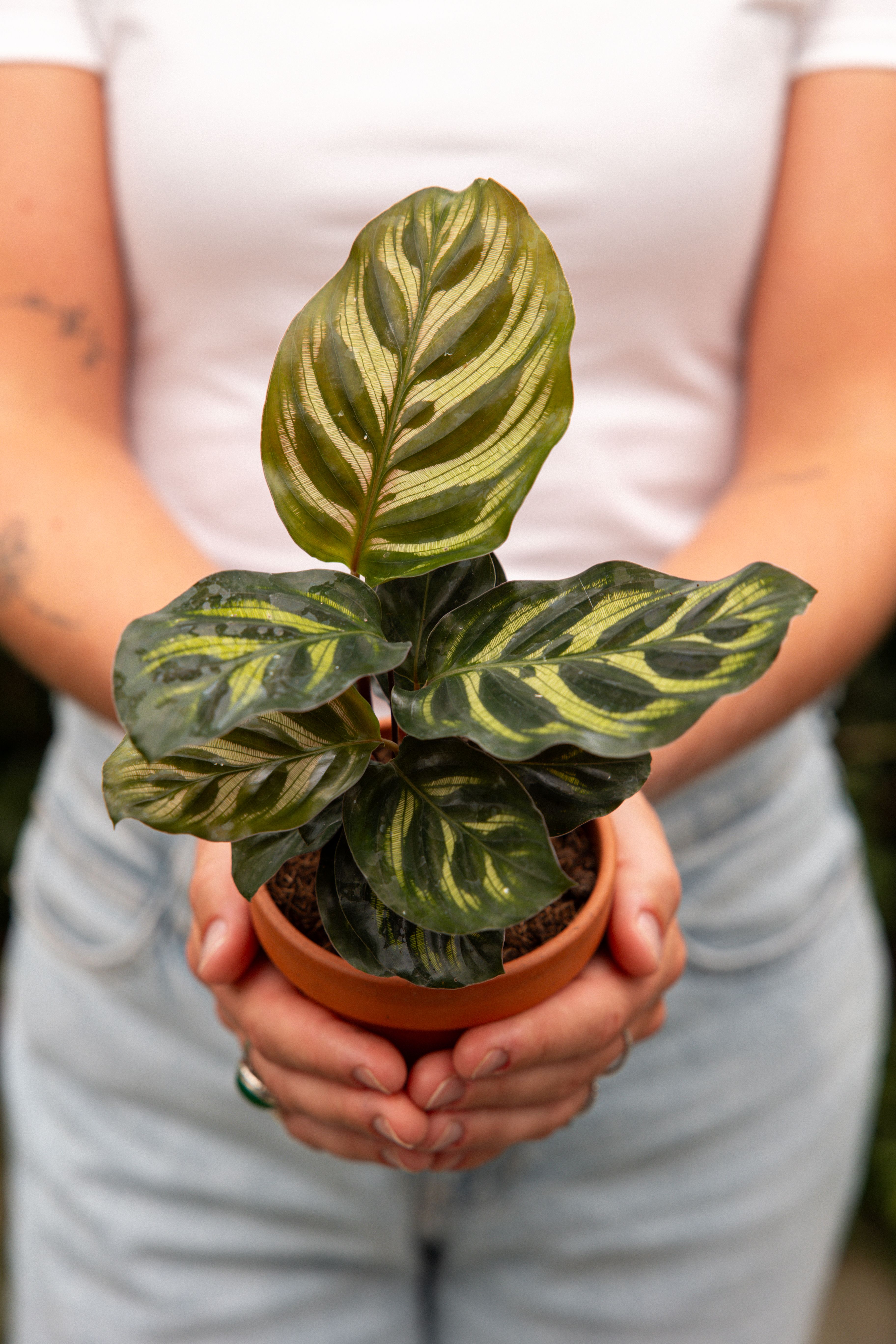
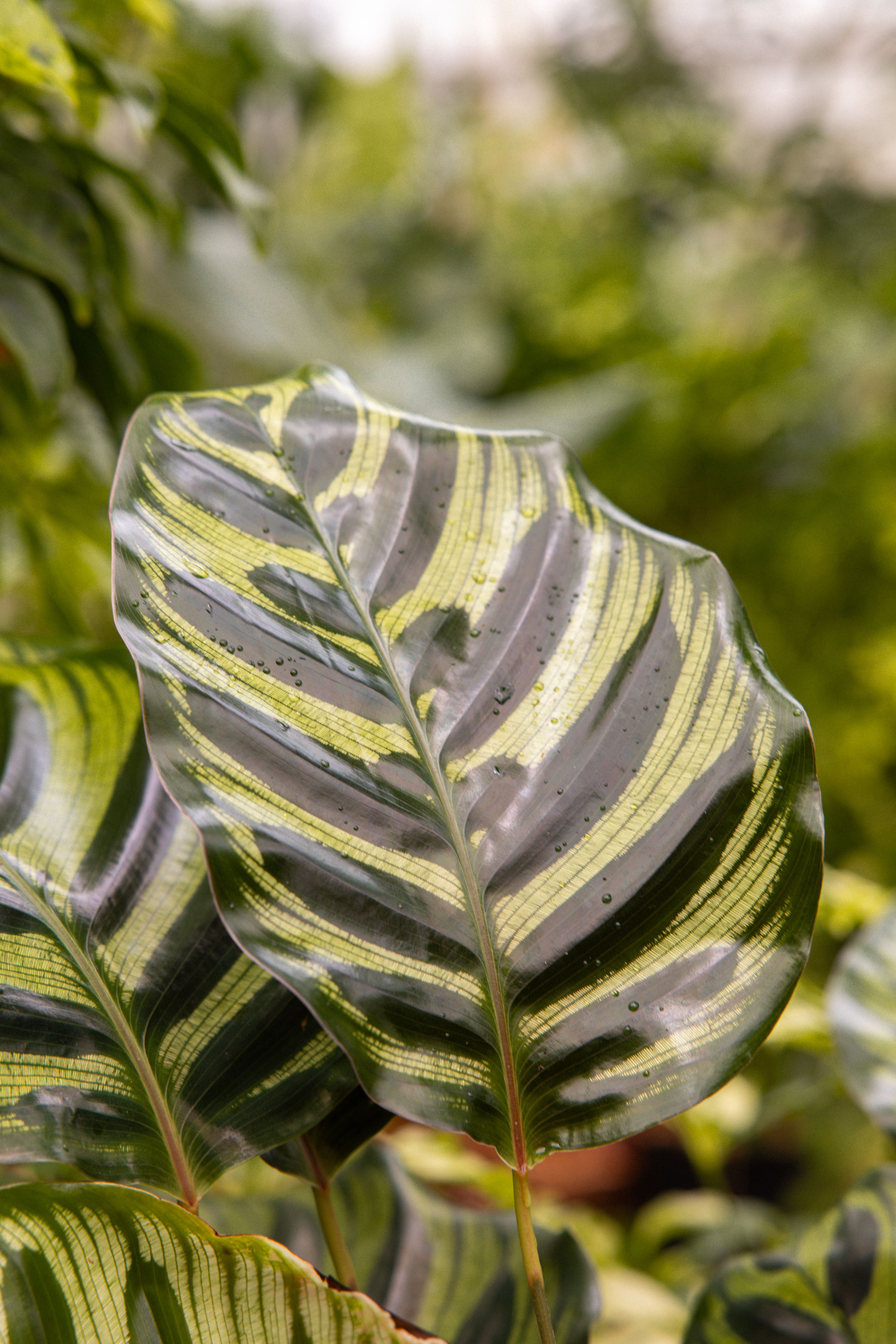
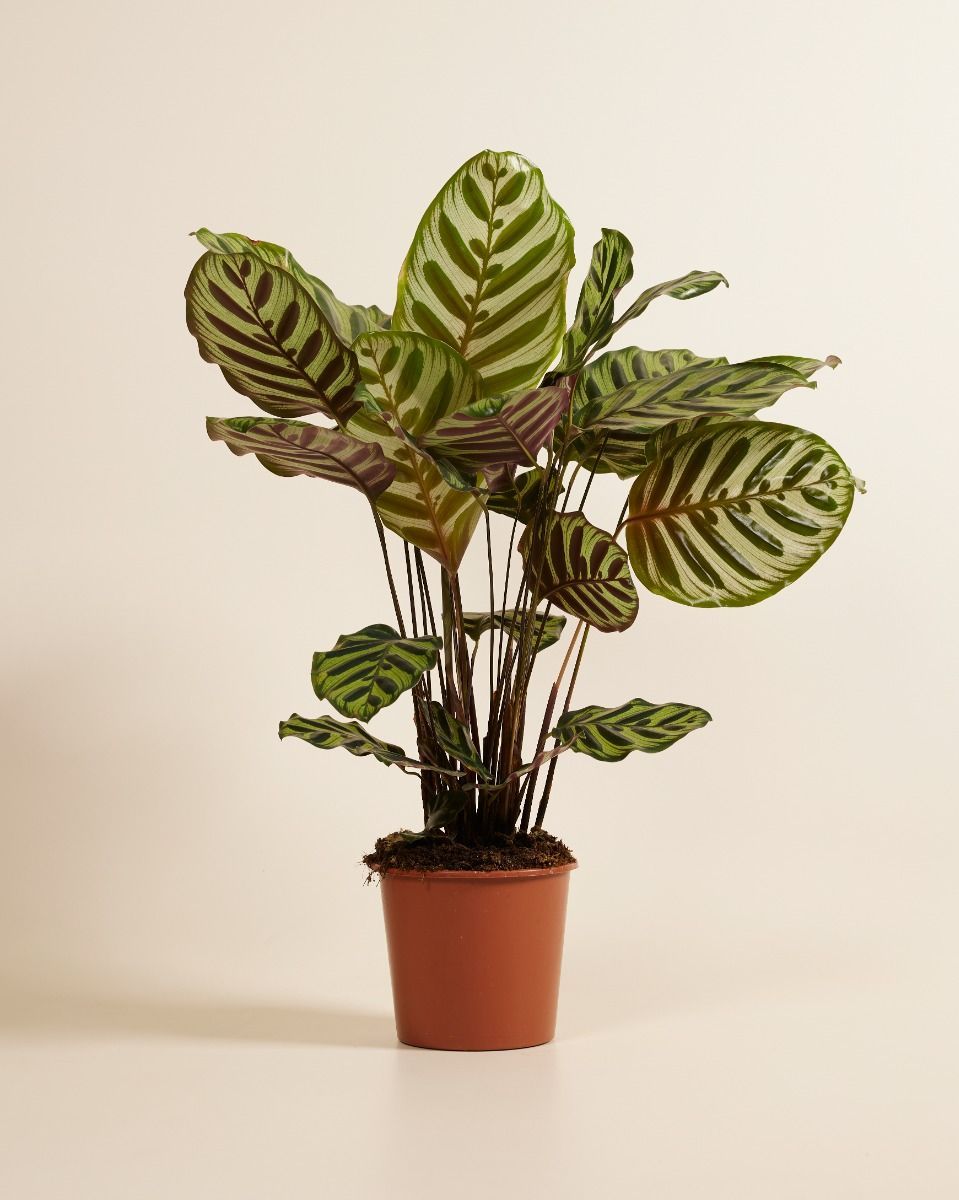
Introducing this month's Plant of the Month: the stunning Calathea Makoyana, better known as the Peacock Plant. She earns that name for a reason. Her thin, papery leaves are painted with intricate dark green feathered patterns on top, with a deep purple-red underside that peeks through when the light hits just right. If you're after a green friend that feels like living art, she's the one.
Her leaves grow tall on slender stems, giving her an elegant, upright shape that works beautifully as a statement plant on a side table, a plant stand, or grouped with other calatheas for a lush, layered look. She's a plant that draws the eye without needing to shout.
Fun fact! The Peacock Plant is a true prayer plant. In the evening, her leaves fold upward as if she's tucking herself in for the night, then relax open again come morning.
Calathea Makoyana

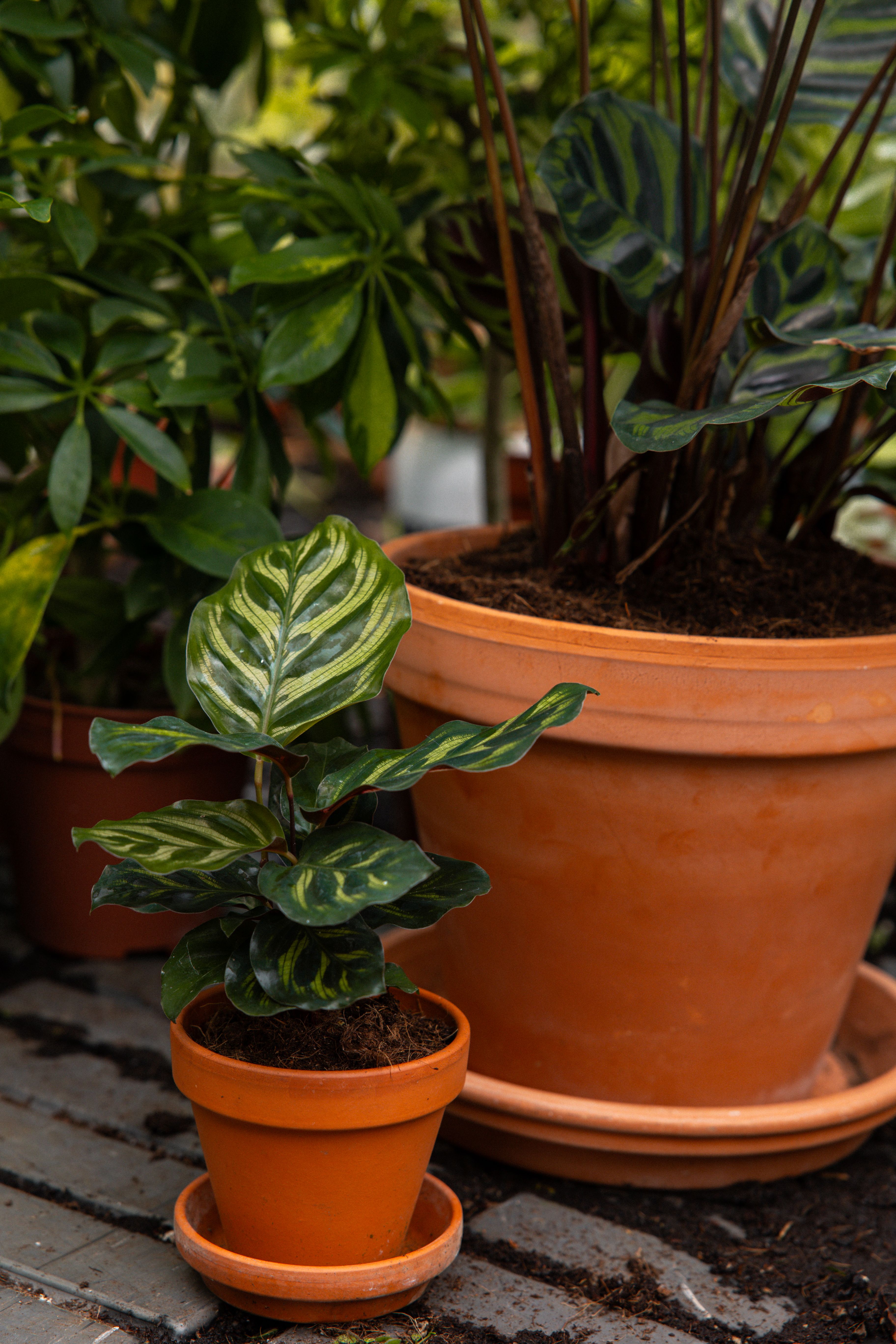
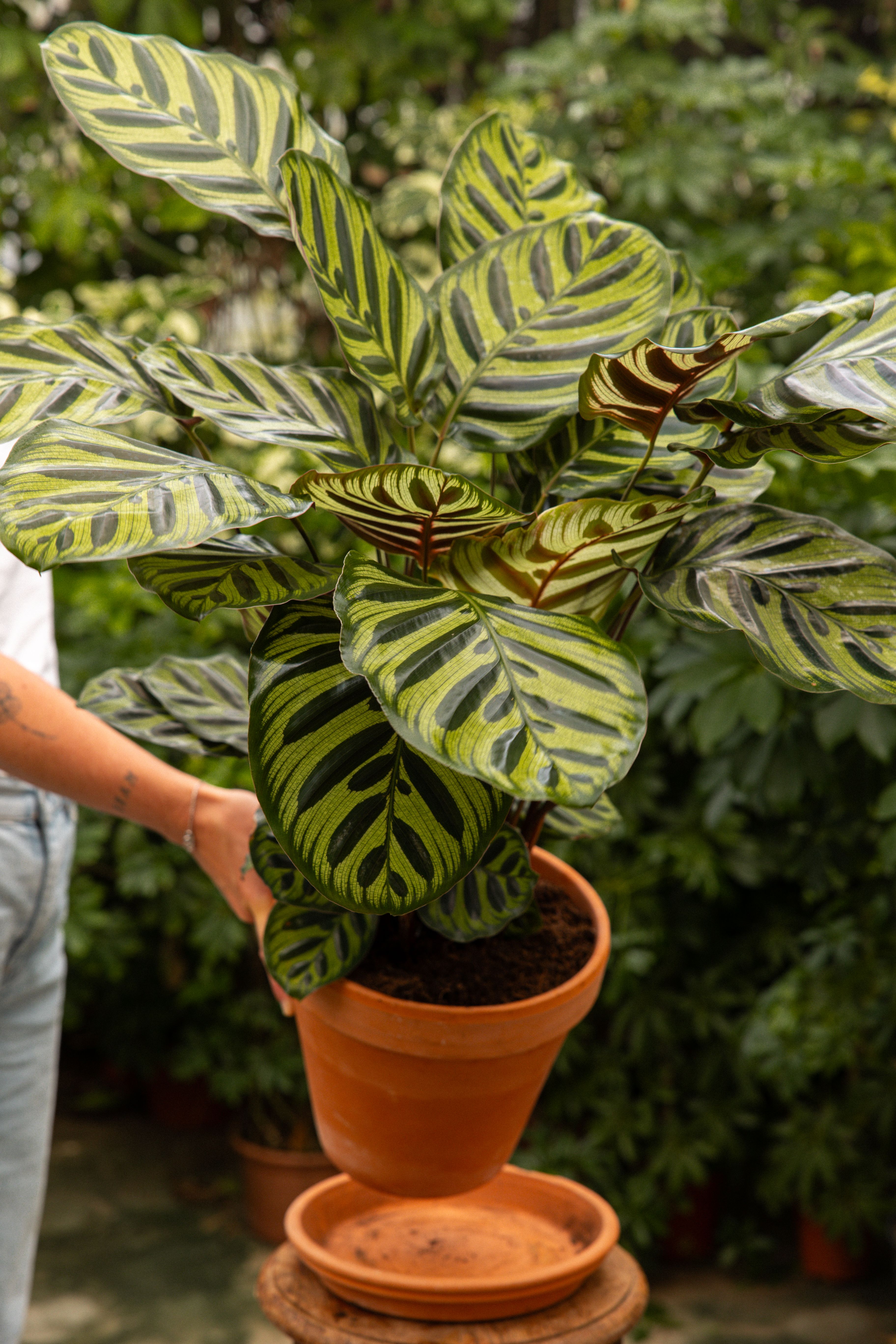
She's originally from the rainforests of Brazil, where she grows low to the ground under a thick canopy. That background explains a lot about what she loves in your home: shade, warmth, and moisture.
Fun fact! Those striking leaf markings aren't just decorative. In the wild, the patterns help her leaves blend into the dappled light of the forest floor, a clever bit of natural camouflage.
Calathea Makoyana care guide
The Calathea Makoyana can be a little particular, but once you understand what she needs, she becomes a rewarding green friend to care for. She loves consistency, so a regular watering routine, stable temperature and humid environment will keep her happiest.
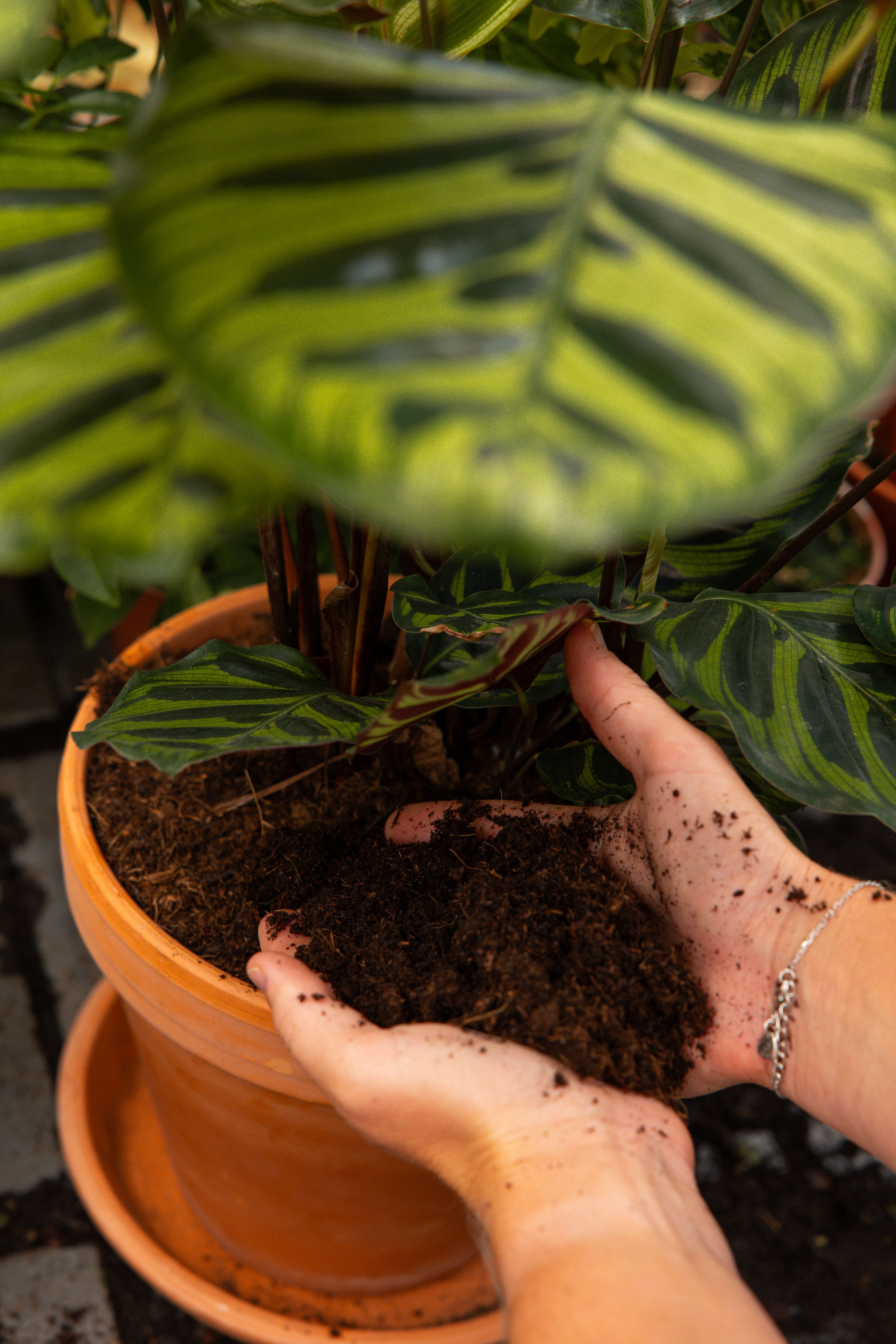
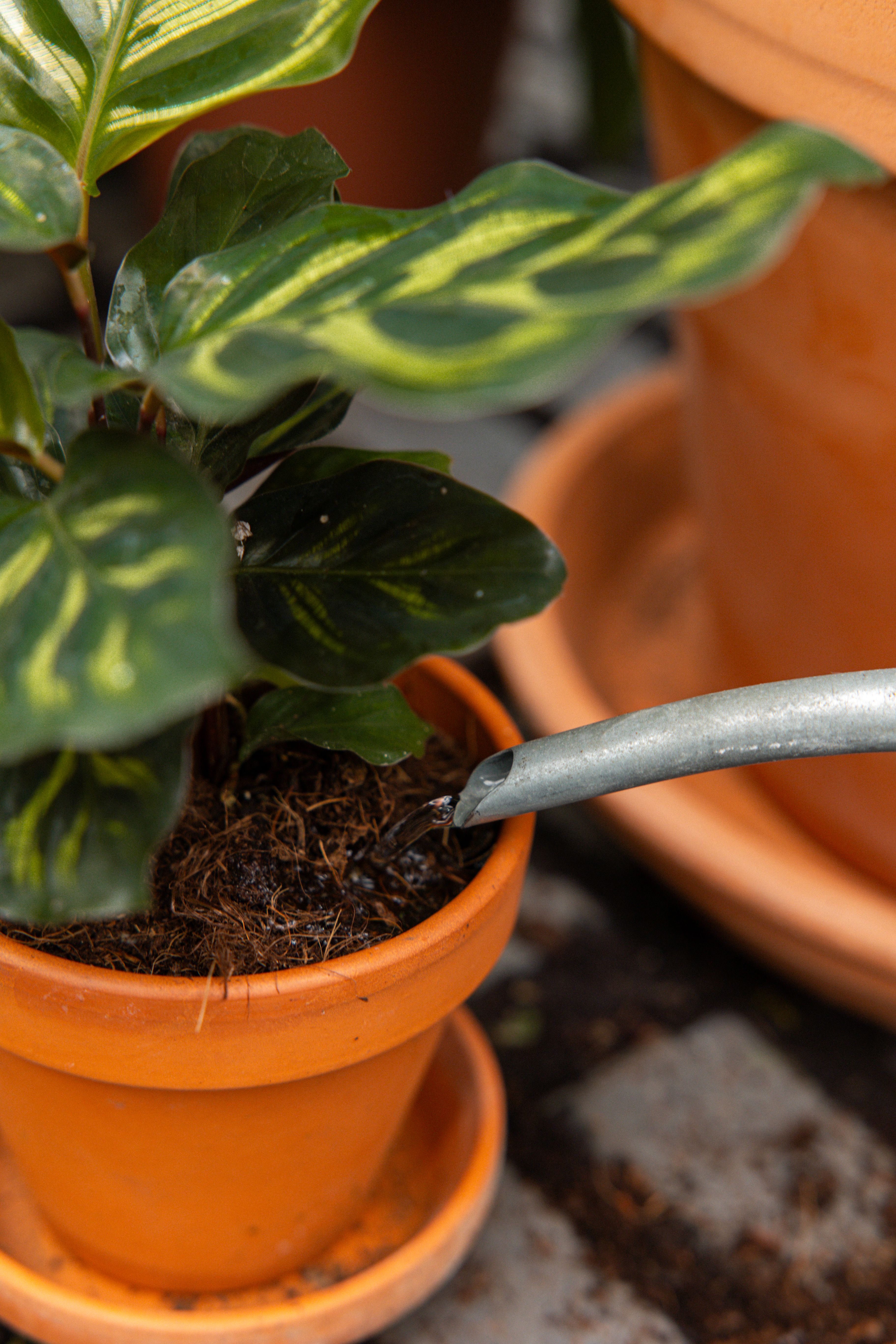
How often should you water a Calathea Makoyana?
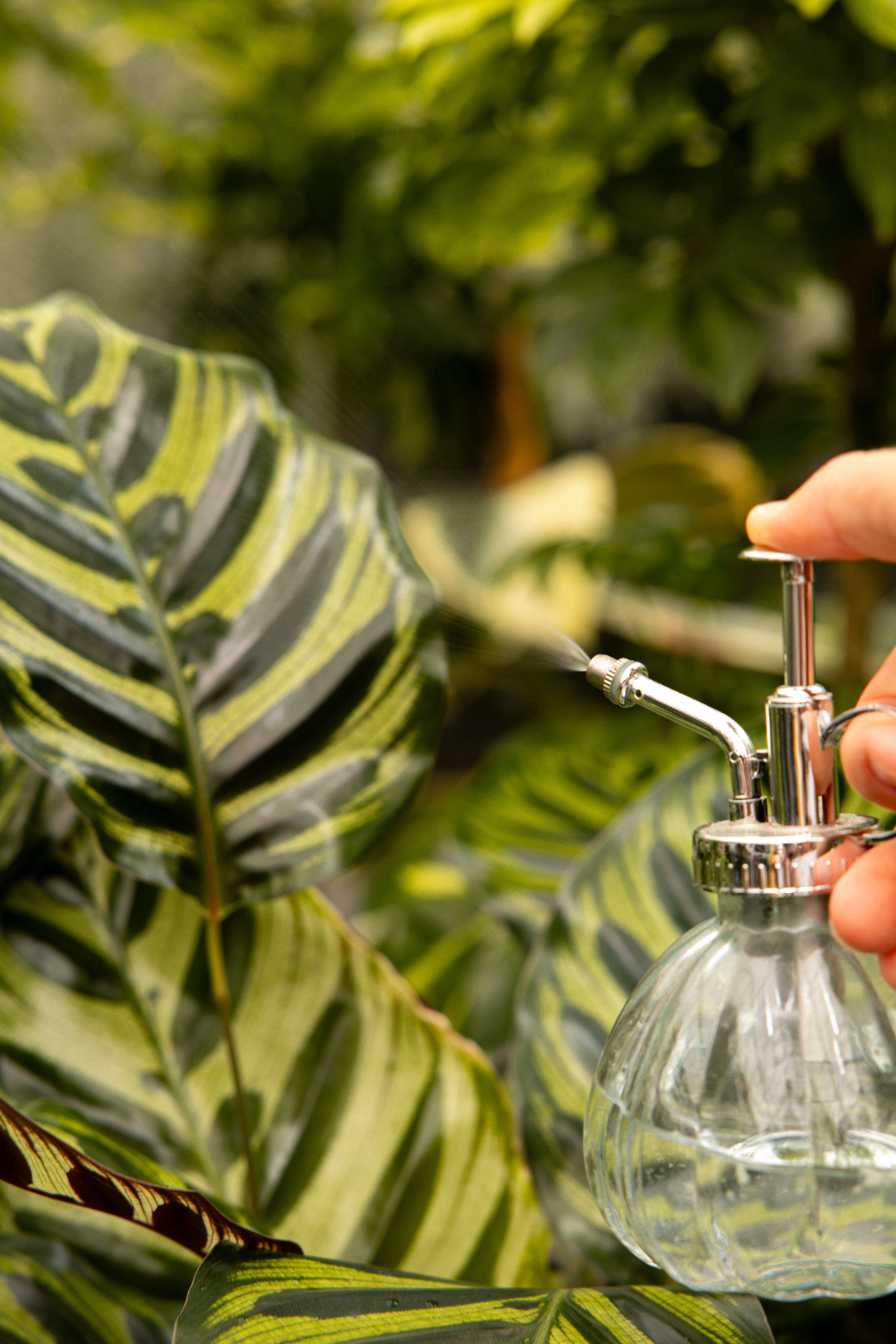
Keep her soil lightly moist at all times, never soggy and never bone dry. Water when the top layer of soil starts to feel dry to the touch, and always use room temperature water. She's sensitive to the salts and minerals found in tap water, so filtered or rainwater will keep her happiest.
Tip: Curling leaves do not always mean she needs more water. Check the soil first, as low humidity, cold air or too much sunlight can cause similar symptoms.
How much light does a Calathea Makoyana need?
She thrives in medium, indirect light. A spot a little further back from a bright window suits her well, mimicking the dappled shade of her native rainforest floor. Too much direct sun will fade and scorch her delicate leaves, while too little light can mute those beautiful patterns.
Fun fact! Her patterned foliage is adapted to the dappled light of the rainforest floor, where sunlight filters through the leaves above her.
Best soil mix for Calathea Makoyana
A light, well-draining mix that still holds a bit of moisture is ideal. A blend of potting soil with perlite and a handful of orchid bark gives her roots the airflow they need while keeping some moisture close by, exactly the balance she's looking for.
Best temperature and humidity for Calathea Makoyana
The Peacock Plant likes it warm, ideally between 18 and 24°C, and she does not tolerate cold drafts well. Humidity is the real key to keeping her happy. Aim for 50% or higher if you can, with a pebble tray, a humidifier, or a steamy bathroom spot all doing the trick.
Fun fact! Calathea leaves are thinner than those of many other houseplants, which means they lose moisture more quickly and react strongly to dry air.
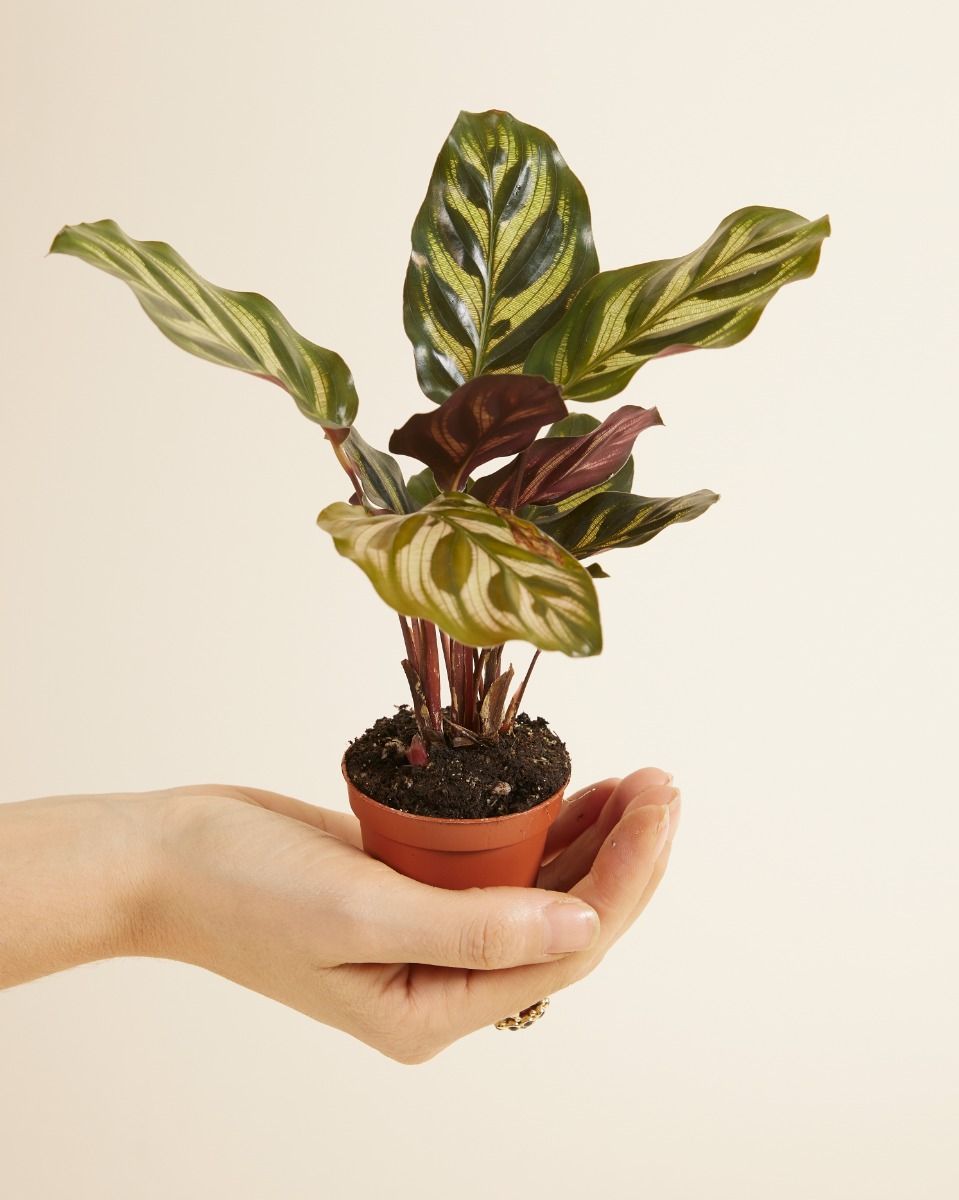
How to propagate Calathea Makoyana
Propagating the Peacock Plant is done through division rather than cuttings, since she grows from a clump of rhizomes rather than a single stem. It's a simple way to turn one plant into two.
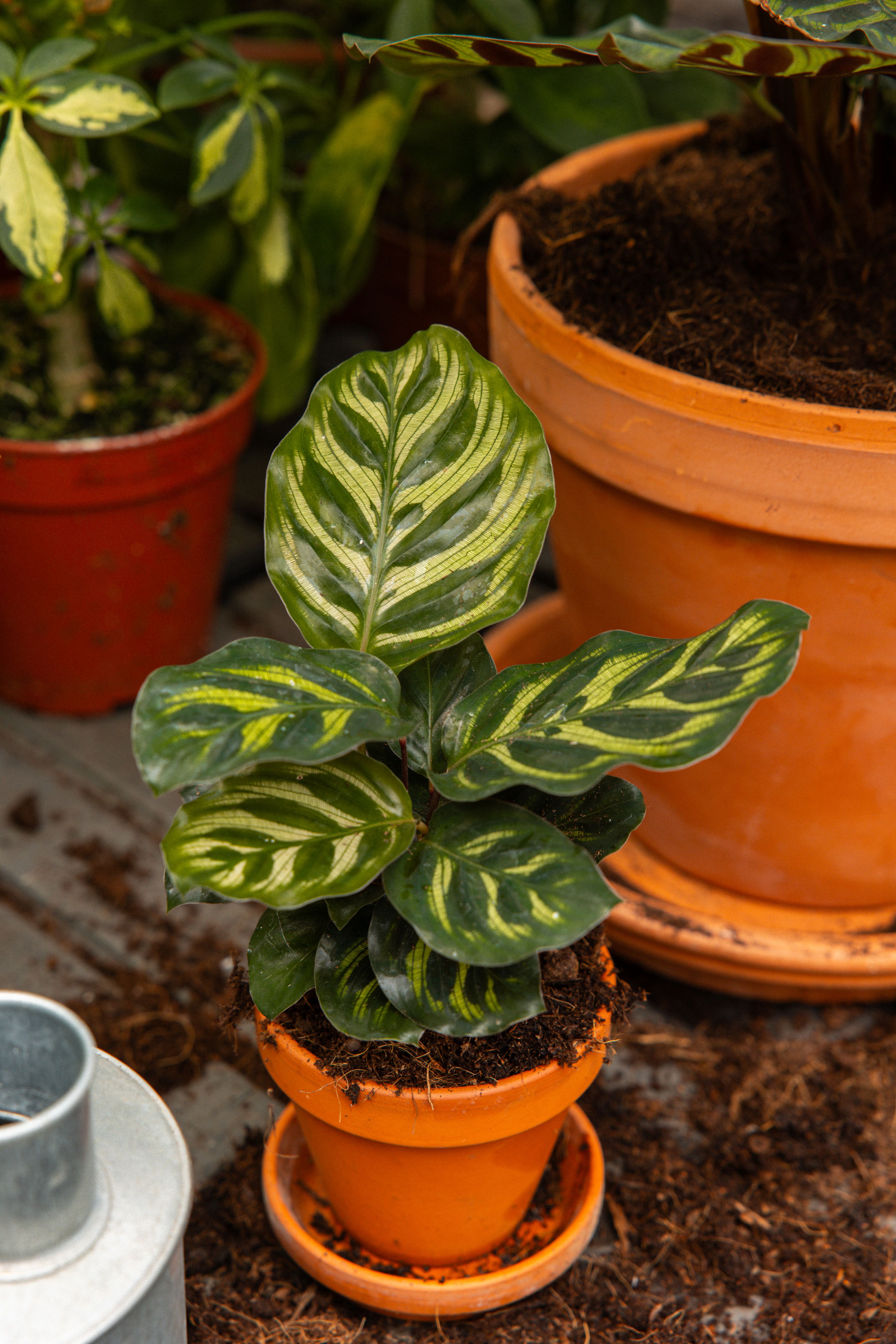
Step 1. Choose the right moment
Wait until repotting time or until your plant has grown large and full. A well established, healthy plant with multiple stems divides far more successfully than a young or stressed one.
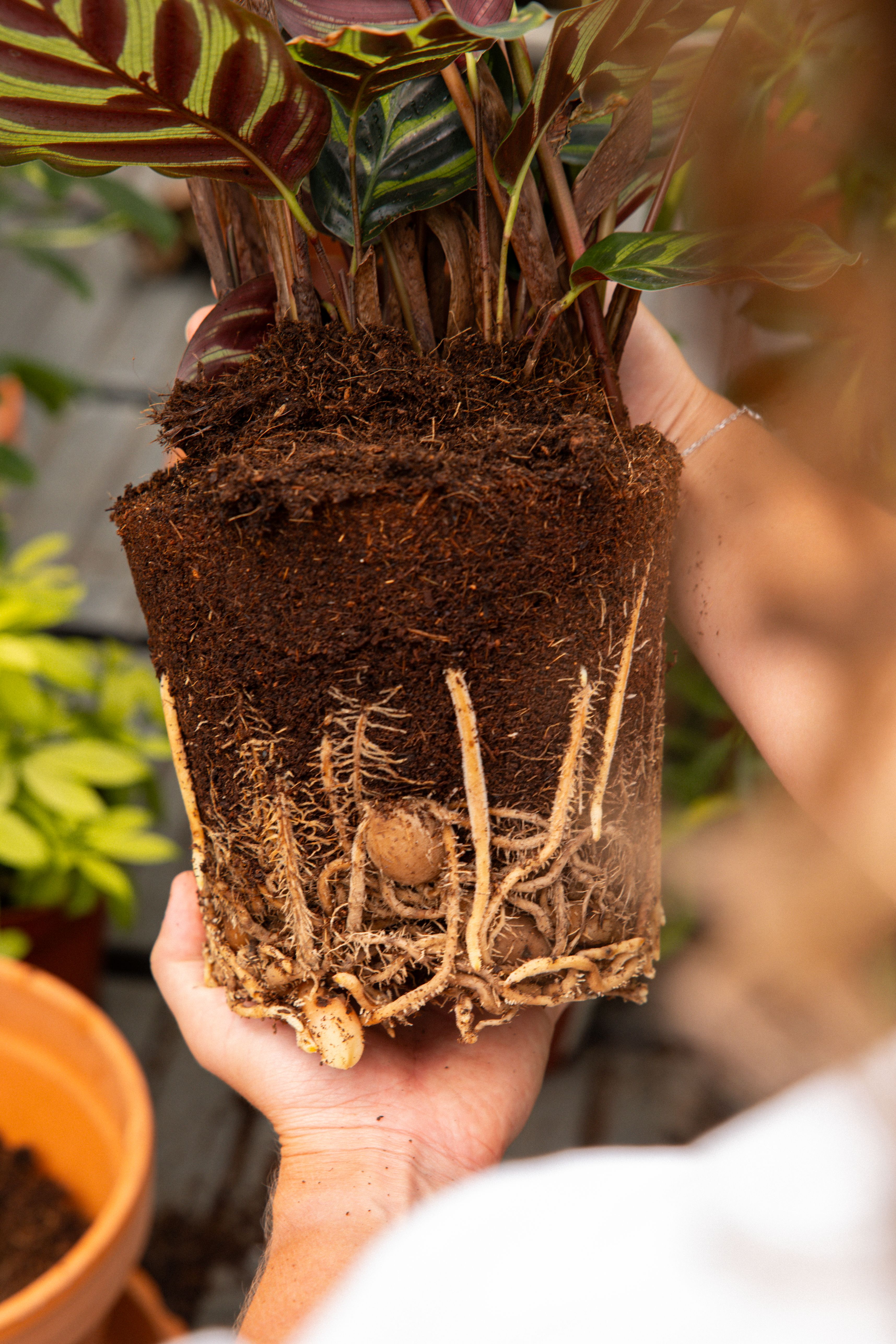
Step 2. Remove her from the pot.
Gently ease the whole root ball out of its pot. Loosen the soil around the roots with your fingers so you can clearly see the separate clumps of rhizomes and stems.
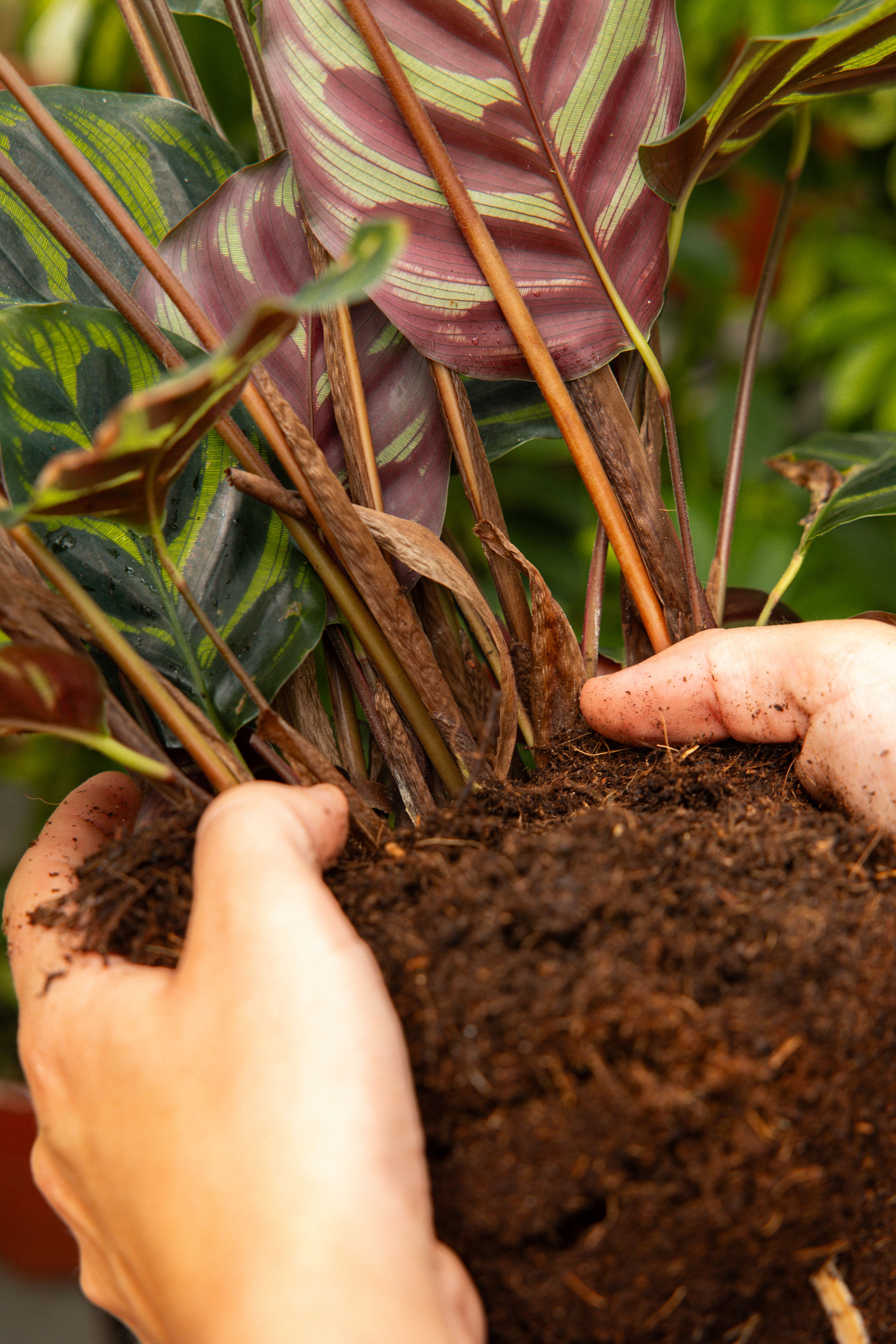
Step 3. Find natural divisions
Look for sections where the plant naturally separates into smaller clumps, each with its own stems and roots attached. These natural breaks are the easiest and safest places to divide.
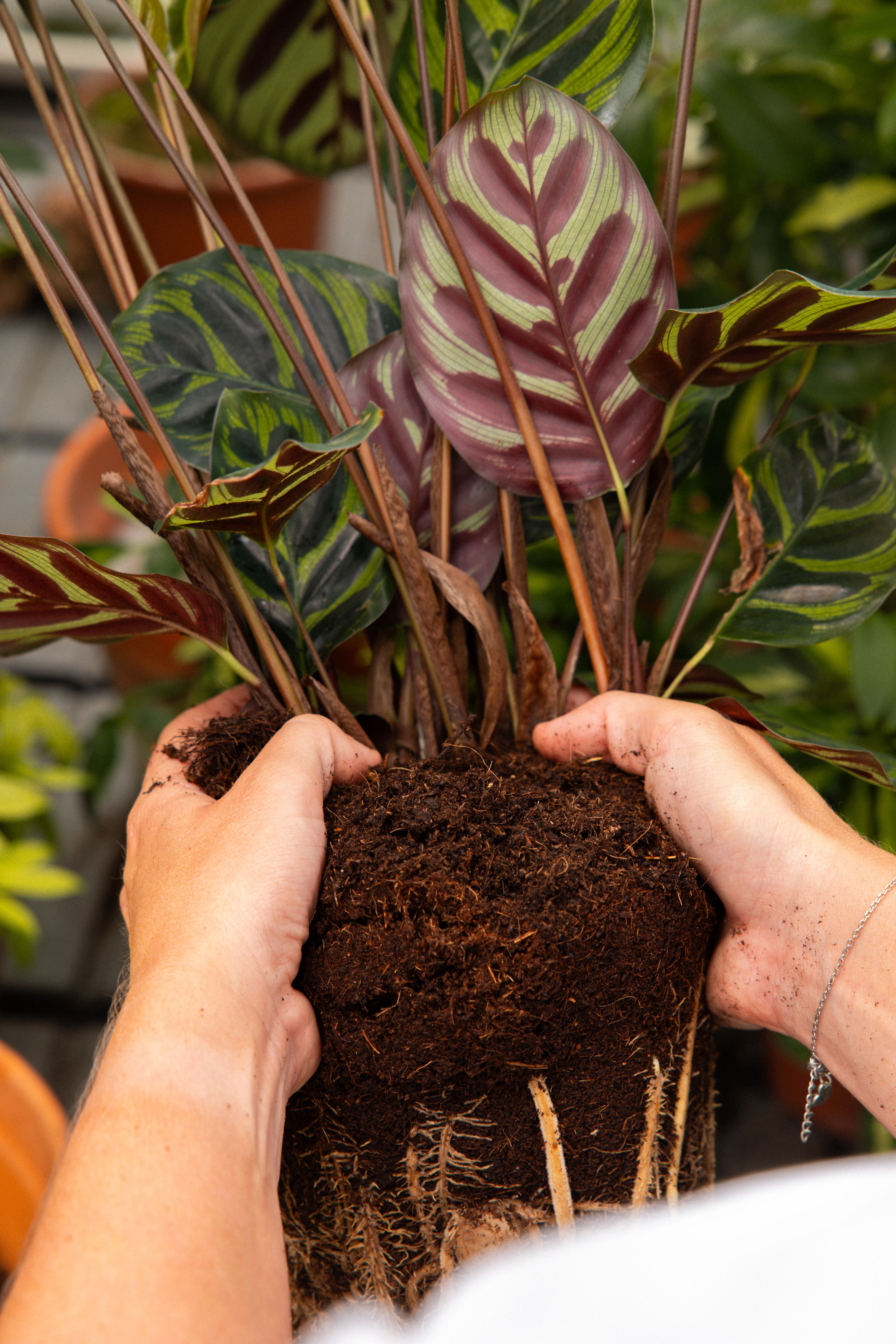
Step 4. Divide carefully
Use clean hands or a sharp, sterilised knife to gently separate the sections. Make sure each division keeps a good amount of roots and at least a few healthy leaves.
Step 5. Pot each division
Place each new section into its own pot with fresh, well draining soil. Water lightly to help the soil settle around the roots without compacting it. Give her time to settle.
Keep the new divisions warm, in medium indirect light, and in high humidity while they recover. Some leaf drooping in the first week or two is normal as she adjusts.
Fun fact! Dividing a mature Peacock Plant is the easiest way to fill your space with her feathered leaves twice over.
Buy Calathea Makoyana
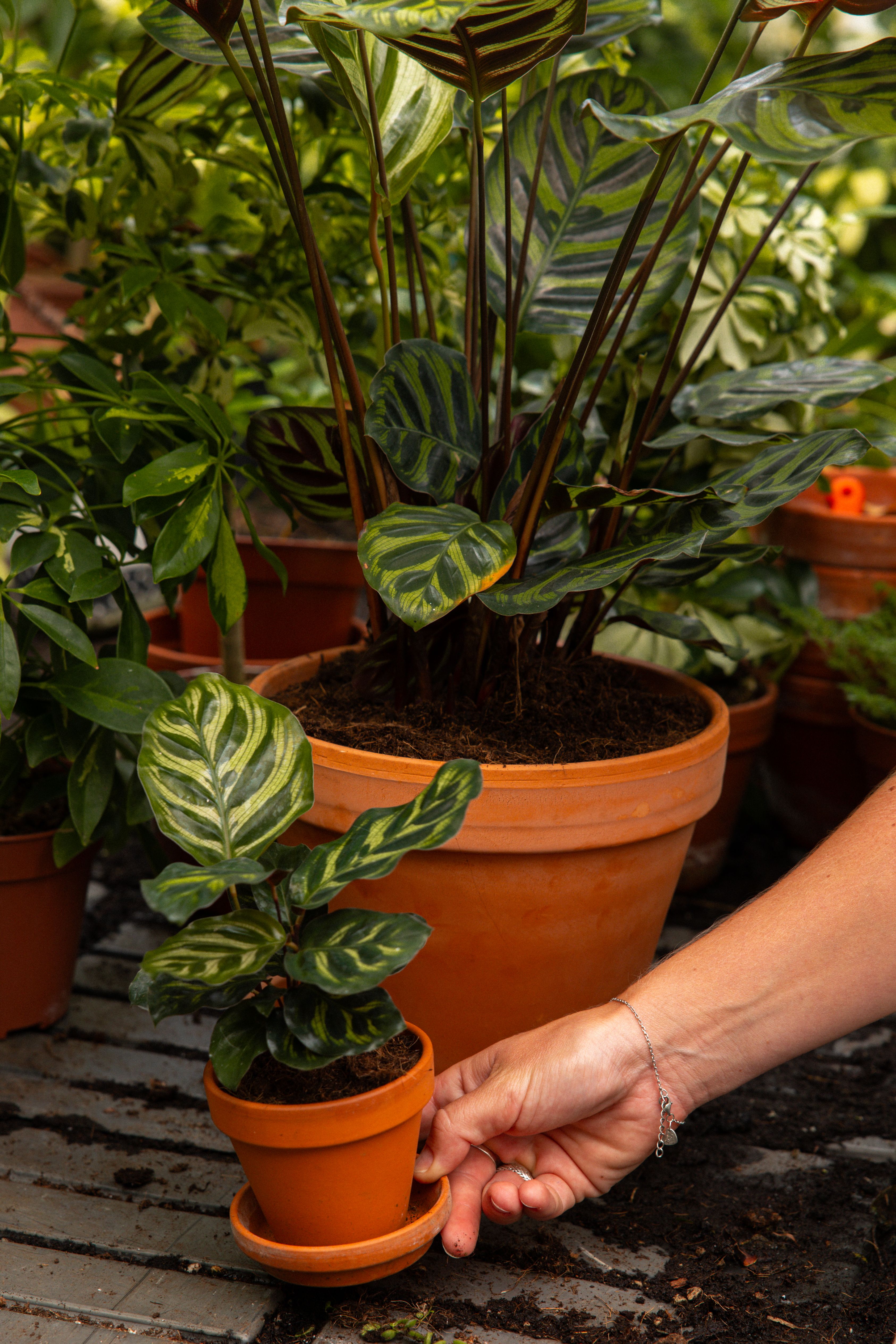
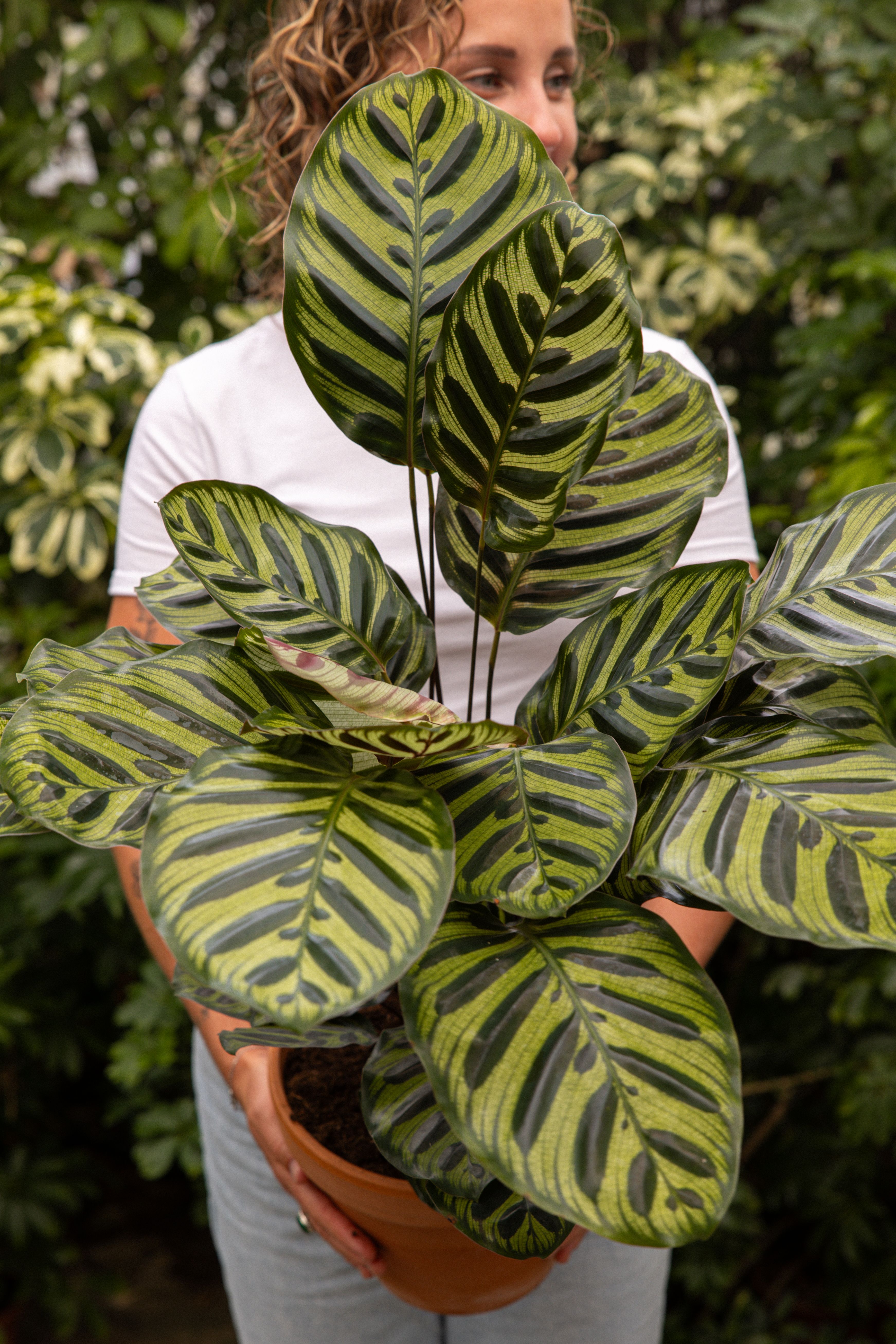
Ready to bring a little rainforest drama into your home? The Calathea Makoyana, with her feathered green patterns and deep purple undersides, is the kind of plant that turns a room into a jungle retreat.
This month, the Peacock Plant is available as our Plant of the Month at a special price. Give her a shaded spot, a bit of humidity, and watch her leaves fold and unfold with the light, a small daily reminder that she's thriving right where she is.
Is the Calathea Makoyana easy to care for?
She's considered moderately challenging, mainly because she's particular about humidity and water quality. Once her routine is set, she settles in nicely.
Why are my Peacock Plant's leaves curling?
Curling leaves usually point to low humidity or underwatering. Check that her soil is evenly moist and consider boosting the humidity around her.
Can the Calathea Makoyana handle direct sunlight?
No, direct sun will scorch and fade her leaves. Bright, indirect or medium light keeps her patterns vivid and her leaves healthy.
Is the Calathea Makoyana pet-friendly?
Yes, she's non-toxic to cats and dogs, making her a safe choice for plant lovers with furry housemates.
Why do my Peacock Plant's leaves have brown, crispy edges?
This is a classic sign of low humidity or a build-up of minerals from tap water. Switch to filtered water and raise the humidity around her.
Does the Calathea Makoyana grow quickly?
She grows at a moderate pace, especially in the warmer months with good humidity, giving you a steady stream of new feathered leaves without becoming unruly.