
Plant of the Month
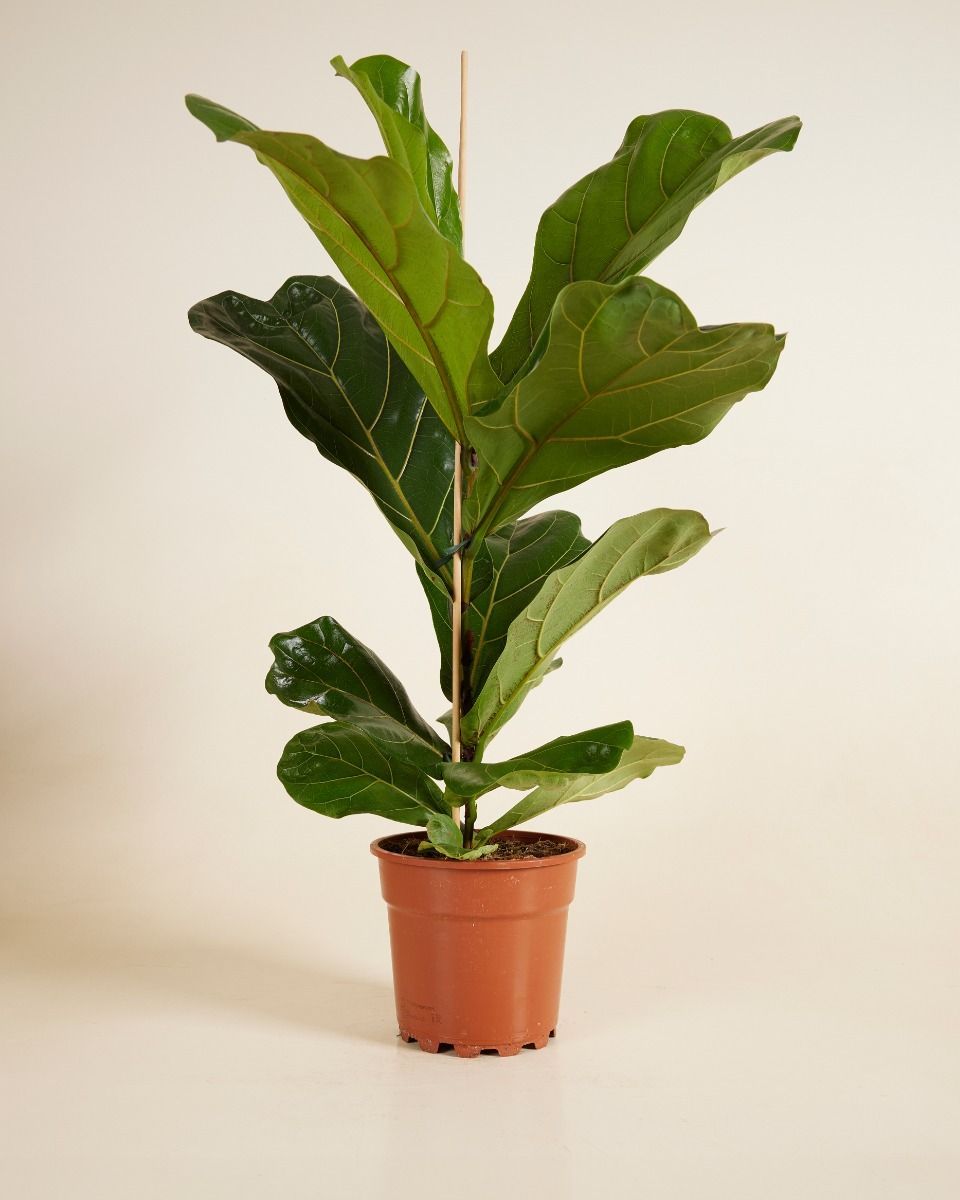
The Ficus Lyrata, also known as the Fiddle Leaf Fig, is one of the most popular indoor statement plants. In this care guide, you’ll learn how to care for Ficus Lyrata, including watering, light, soil, humidity, propagation and common leaf problems.
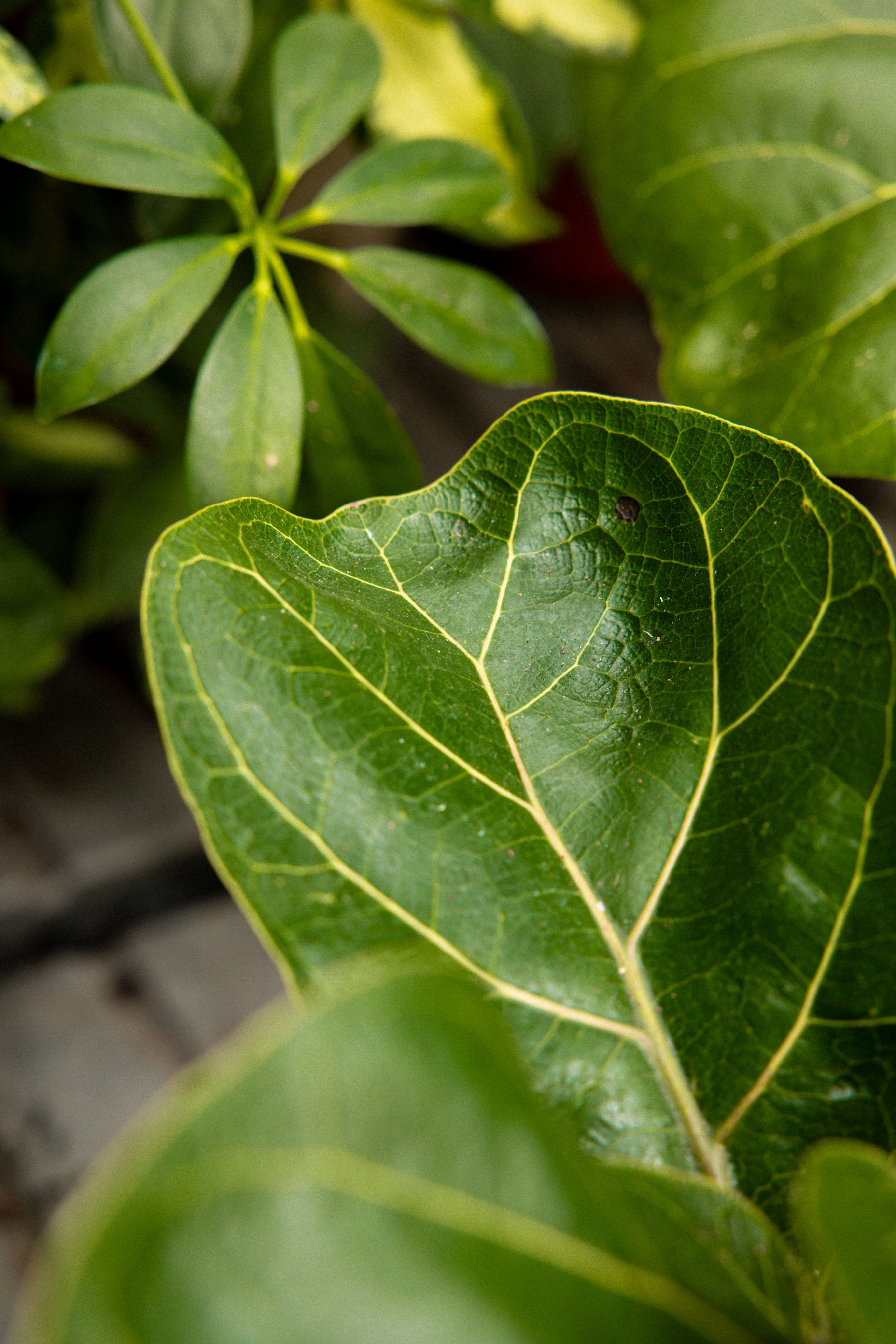
With her large, violin-shaped leaves, deep green colour and strong upright growth, she instantly brings a stylish, jungle-like feeling into your home. She’s elegant, architectural and full of character, making her one of the most iconic statement plants out there.
Fun fact! The name Lyrata comes from the Latin word “lyra”, referring to the lyre-like shape of her leaves. That’s why she is also known as the Fiddle Leaf Fig. Her leaves really do look like little green instruments!
Ficus Lyrata


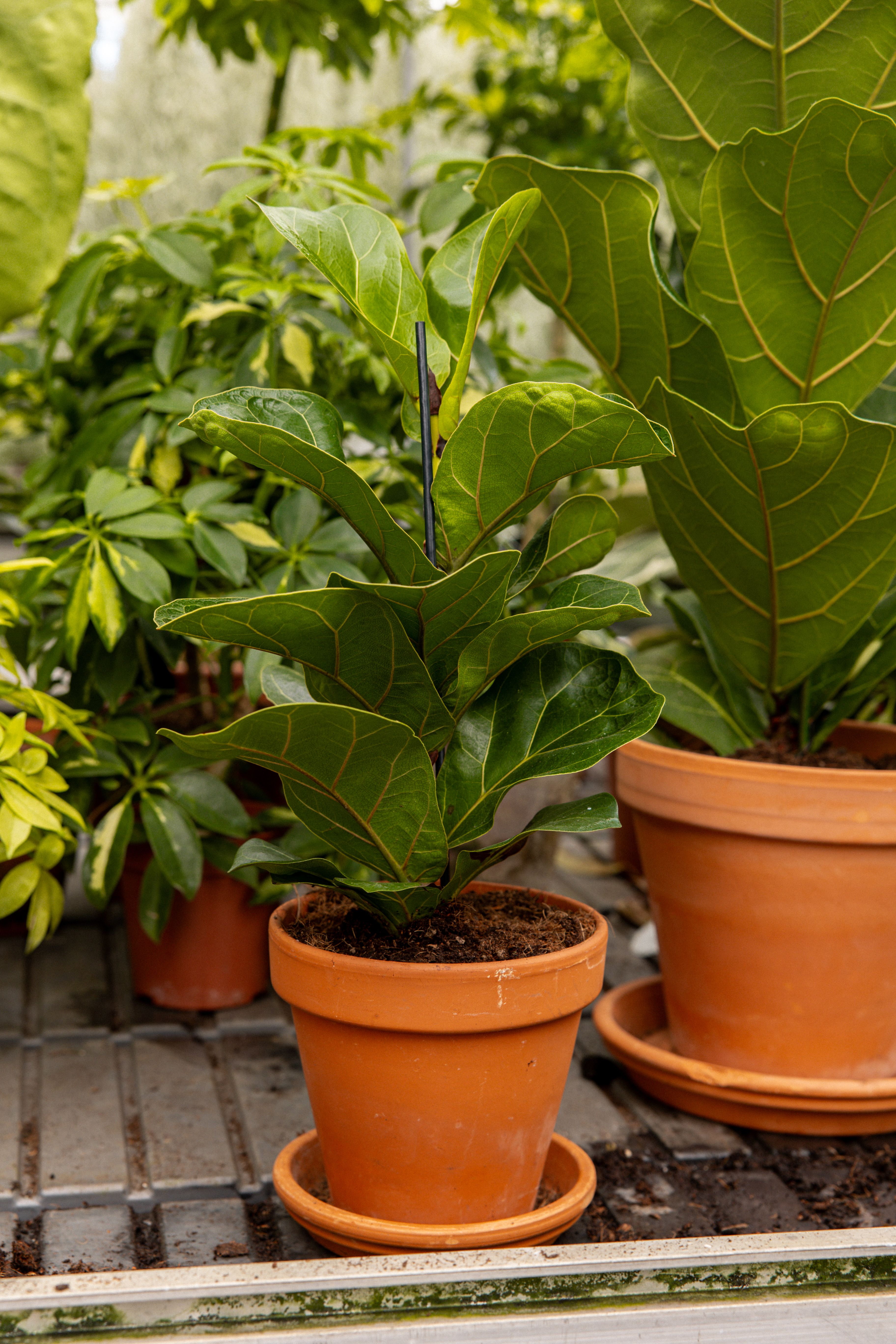
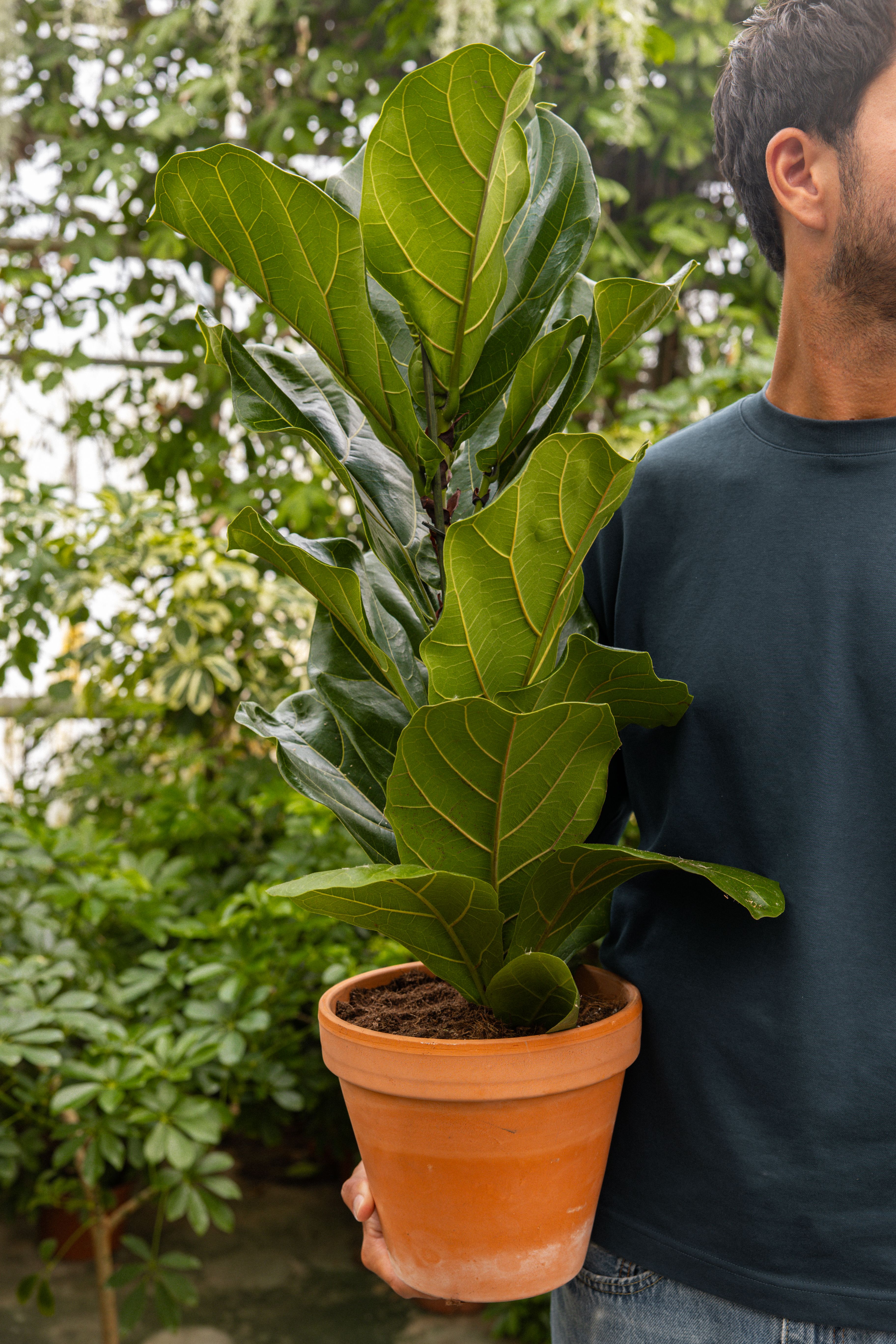
Native to the tropical rainforests of West Africa, the Ficus Lyrata can grow into an impressive tree in the wild. There, she reaches towards the light beneath the forest canopy and develops her signature large leaves to catch as much sunshine as possible. Indoors, she grows a little more slowly, but with the right care she can become a true eye-catcher in your living room.
Fun fact! In her natural habitat, the Ficus Lyrata can grow several metres tall. Indoors, she may not become quite that giant, but she can still grow into a beautiful statement plant over time.
Ficus Lyrata care guide
The Ficus Lyrata may look luxurious, but once you understand what she loves, she’s a wonderful plant to care for. She likes a bright spot, a steady routine and a little patience. Give her the right balance of light, water and stability, and she’ll reward you with strong growth and those gorgeous oversized leaves.
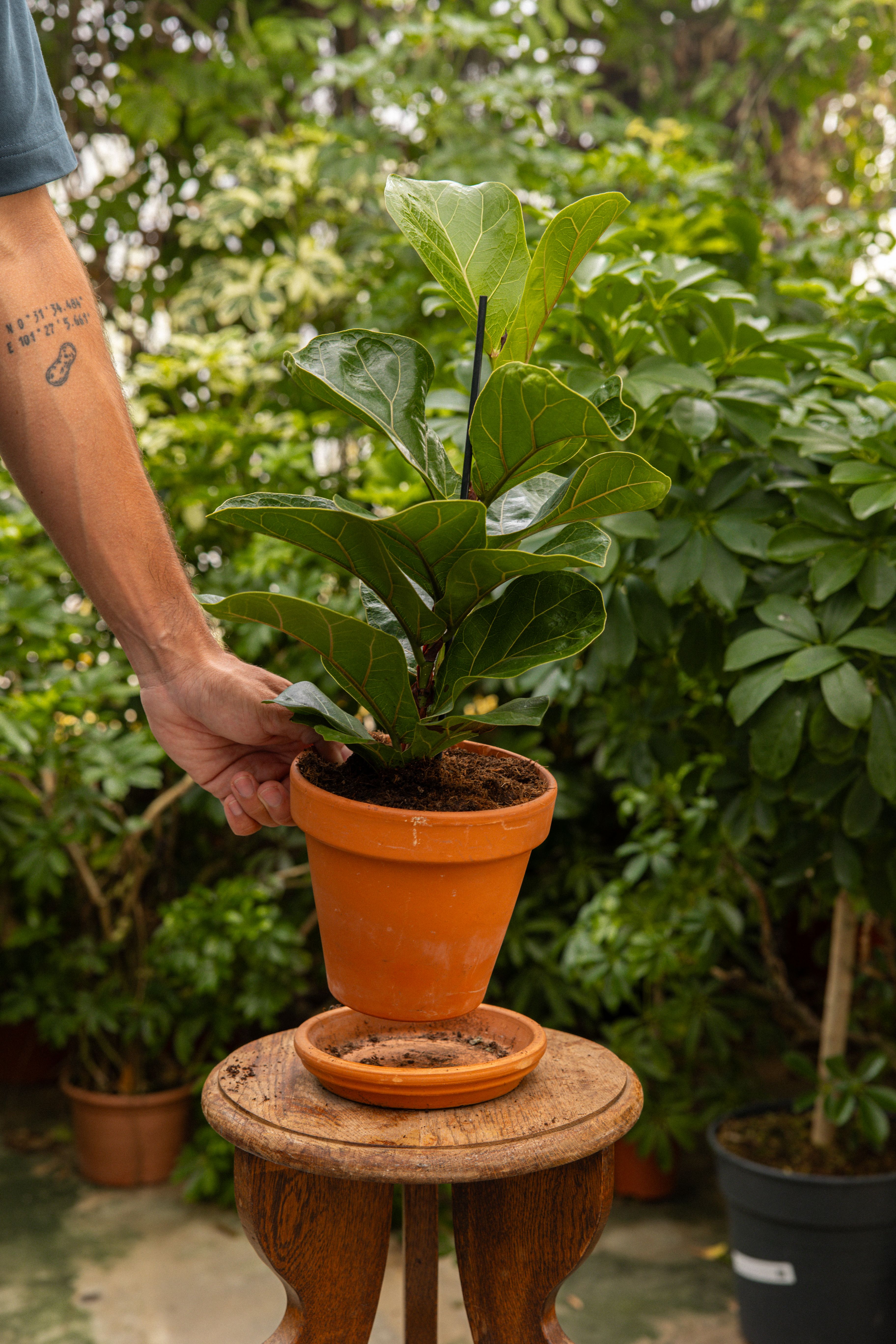
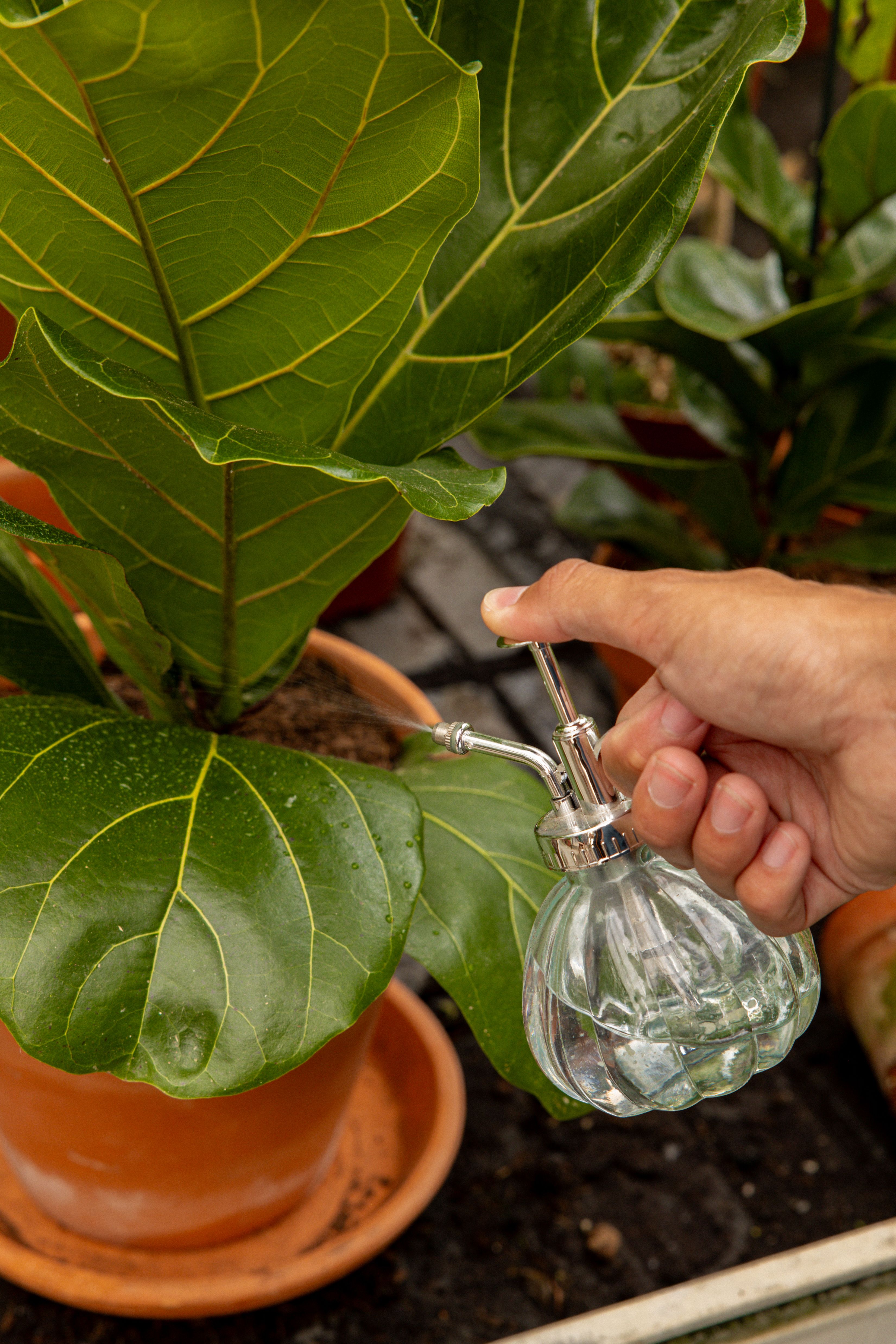
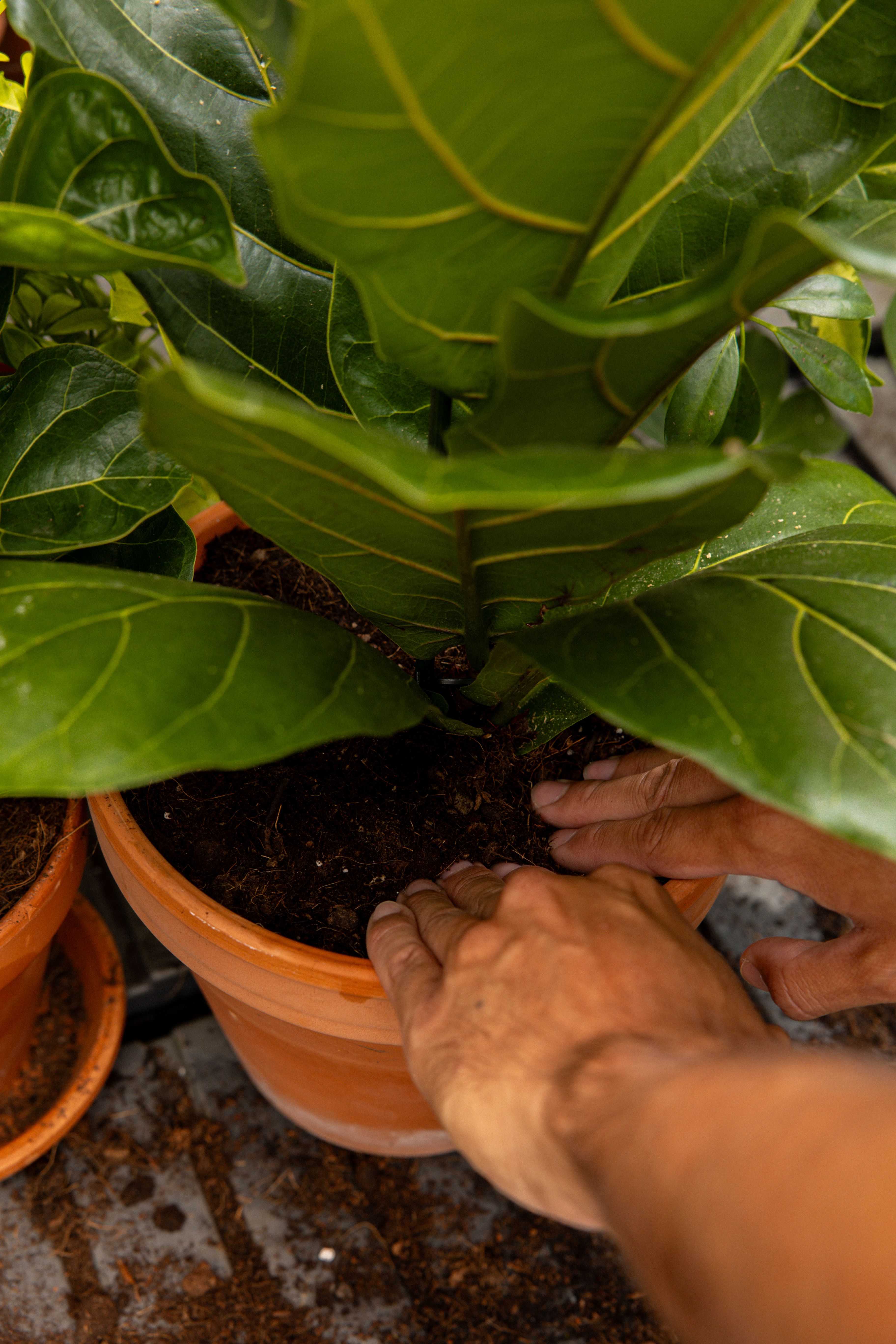
How often should you water a Ficus Lyrata?
The Ficus Lyrata likes her soil to dry out slightly between waterings. Water her when the top few centimetres of soil feel dry, and make sure excess water can drain away easily. She doesn’t like standing in water, as this can lead to root rot.
Tip: Yellowing leaves can be a sign of overwatering, while crispy brown edges may mean she’s too dry or the air around her is lacking humidity. Always check the soil before watering.
How much light does a Ficus Lyrata need?
Bright, indirect light is her favourite. The Ficus Lyrata loves plenty of daylight, but harsh direct afternoon sun can scorch her leaves. A spot near a large window with filtered light is ideal. Too little light can slow her growth and may cause leaf drop.
Fun fact! Ficus Lyrata leaves naturally grow towards the light. Rotate your plant every now and then to help her grow evenly and keep that beautiful upright shape.
Best soil mix for Ficus Lyrata
She thrives in a well-draining potting mix that holds some moisture but never stays soggy. A mix of houseplant soil with added perlite and bark works well, giving her roots both moisture and oxygen. Good drainage is especially important for this plant.
Best temperature and humidity for Ficus Lyrata
As a tropical beauty, the Ficus Lyrata enjoys warmth and stable conditions. Keep her in temperatures between 18 and 27°C and avoid cold drafts, sudden temperature changes and heating vents. She can handle average indoor humidity, but she’ll appreciate a little extra humidity, especially in winter or in very dry rooms.
Fun fact! The Ficus Lyrata is known to be a bit sensitive to change. Moving her too often can cause stress, so once you’ve found a bright, cosy spot she loves, it’s best to let her settle there.
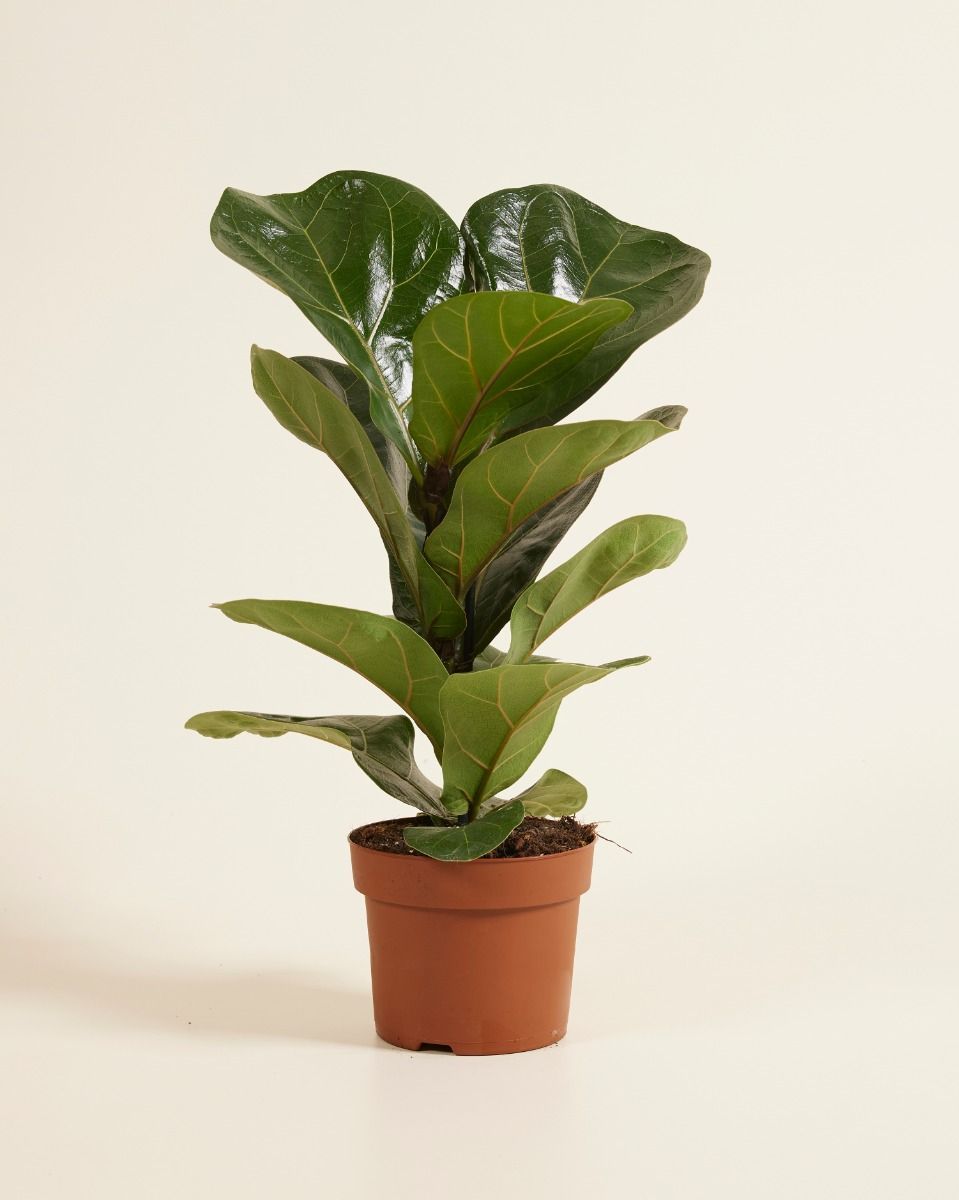
How to propagate Ficus Lyrata
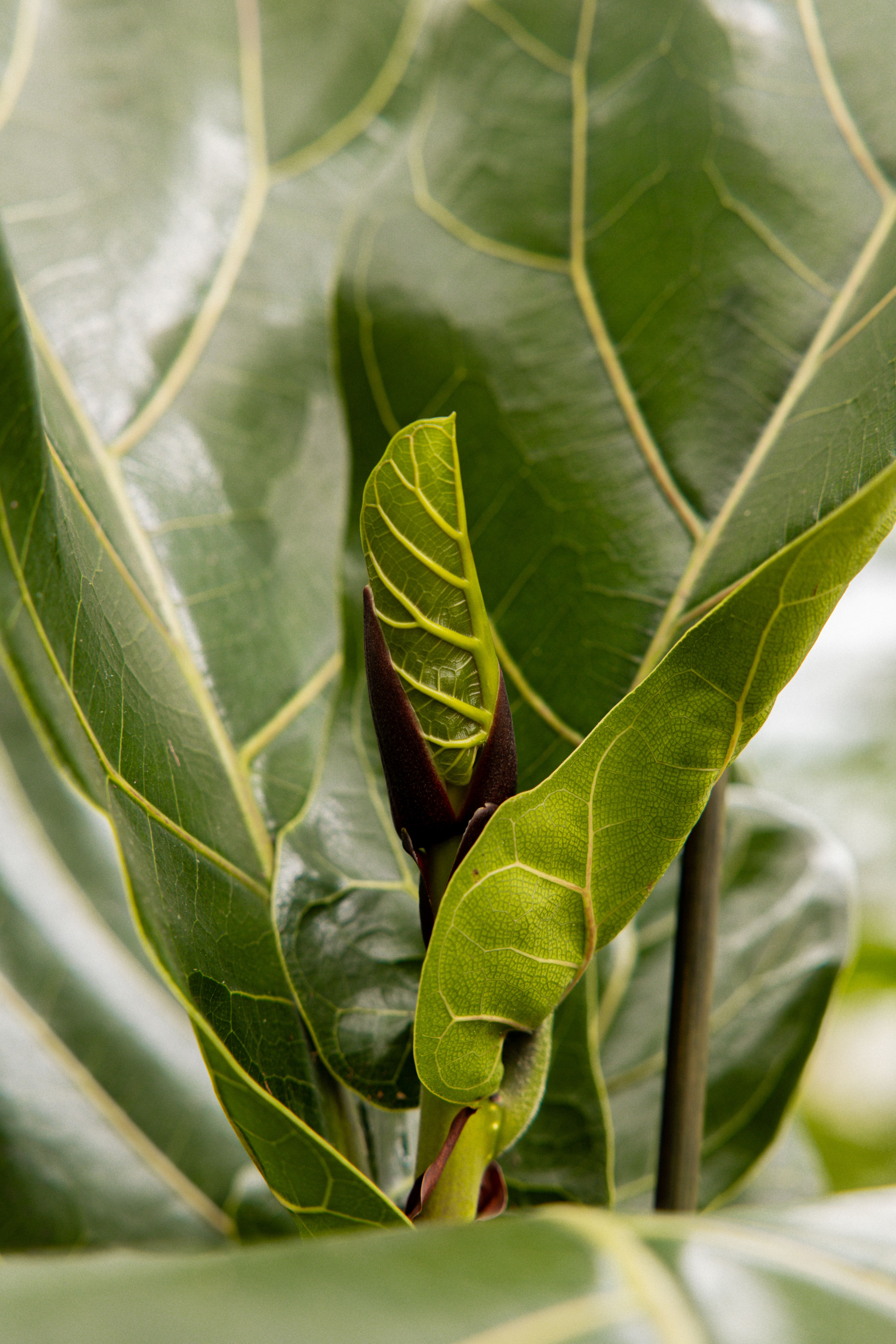
Ficus Lyrata can be propagated through stem cuttings. The best time to do this is in spring or early summer, when the plant is actively growing and has enough energy to recover. Propagation takes patience, but watching those first roots appear is absolutely worth it.
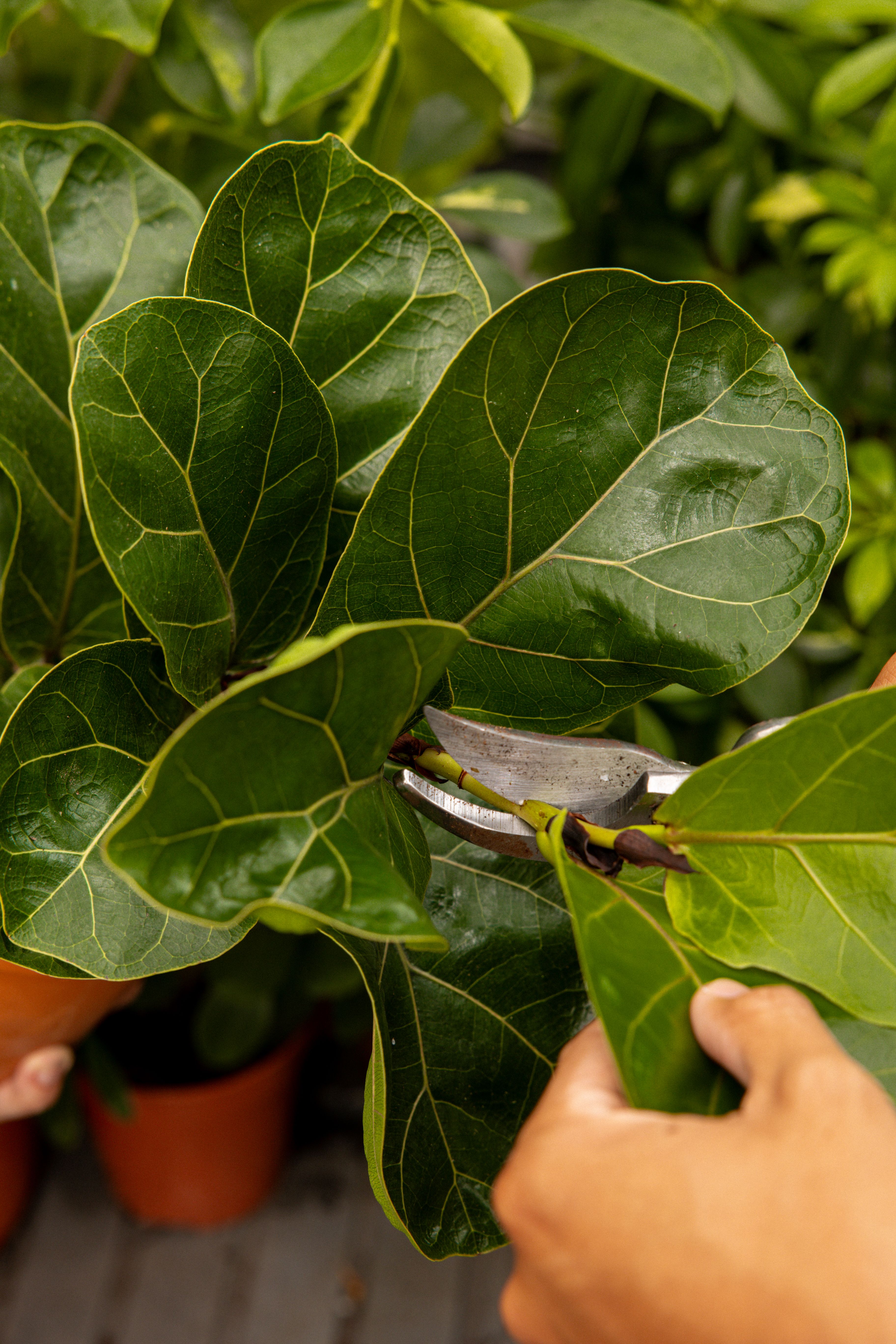

Step 1. Choose a healthy stem
Select a strong, healthy stem with at least one leaf and a visible node. The node is the point where new roots can grow, so this part is essential for successful propagation. Avoid weak, damaged or yellowing growth, as cuttings from a healthy plant have the best chance of rooting.
Step 2. Take the cutting
Use clean, sharp scissors or pruning shears to cut just below a node. A cutting with one or two leaves is usually enough. If the leaves are very large, you can gently reduce the leaf size by cutting part of the leaf away. This helps the cutting save energy while it develops roots.
Step 3. Let the cutting callus briefly
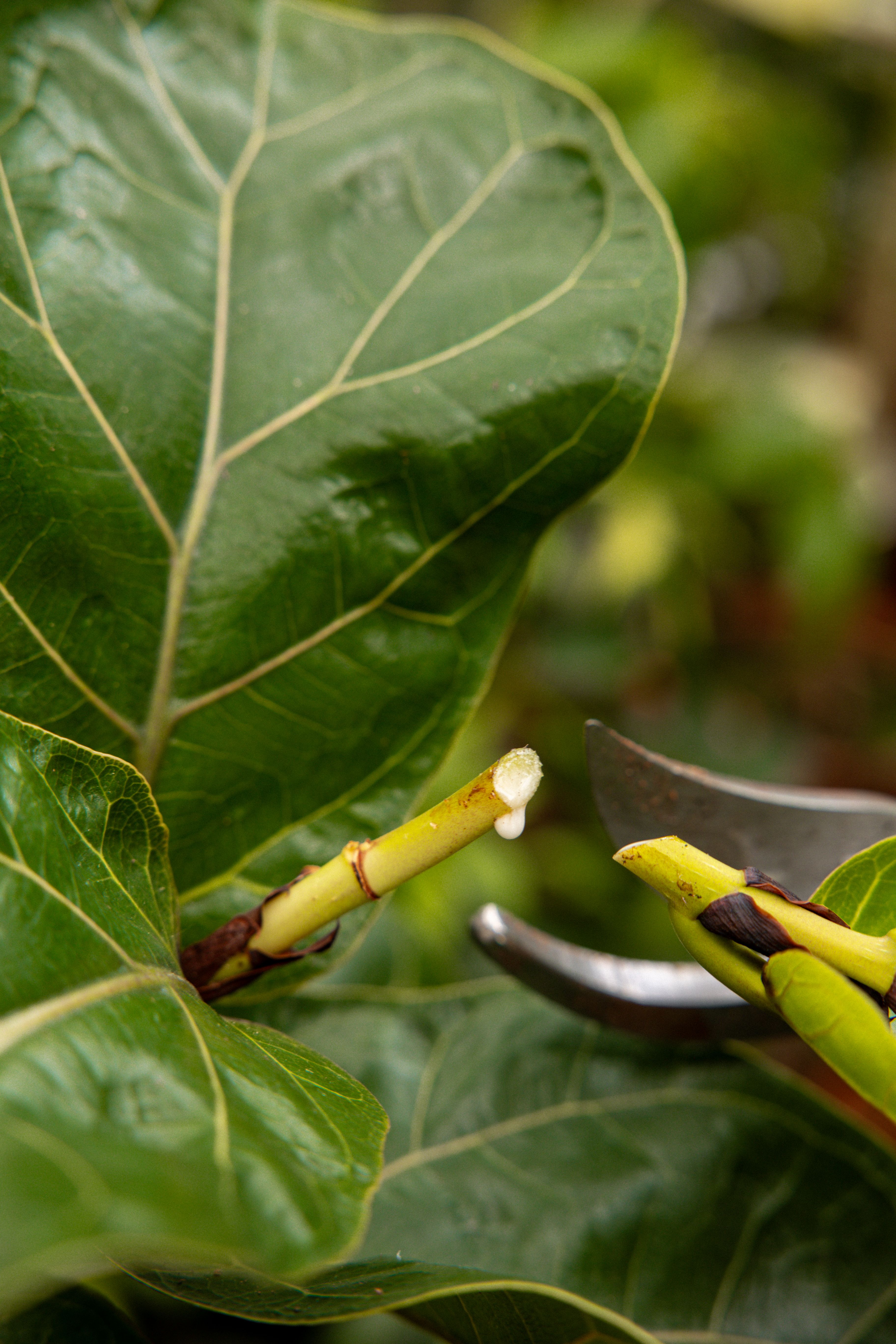
Ficus plants produce a milky sap when cut. Gently wipe this away and allow the cutting to rest for a short while so the cut can slightly dry. Be careful with the sap, as it can irritate skin, so washing your hands afterwards is a good idea.
Step 4. Place in water or soil
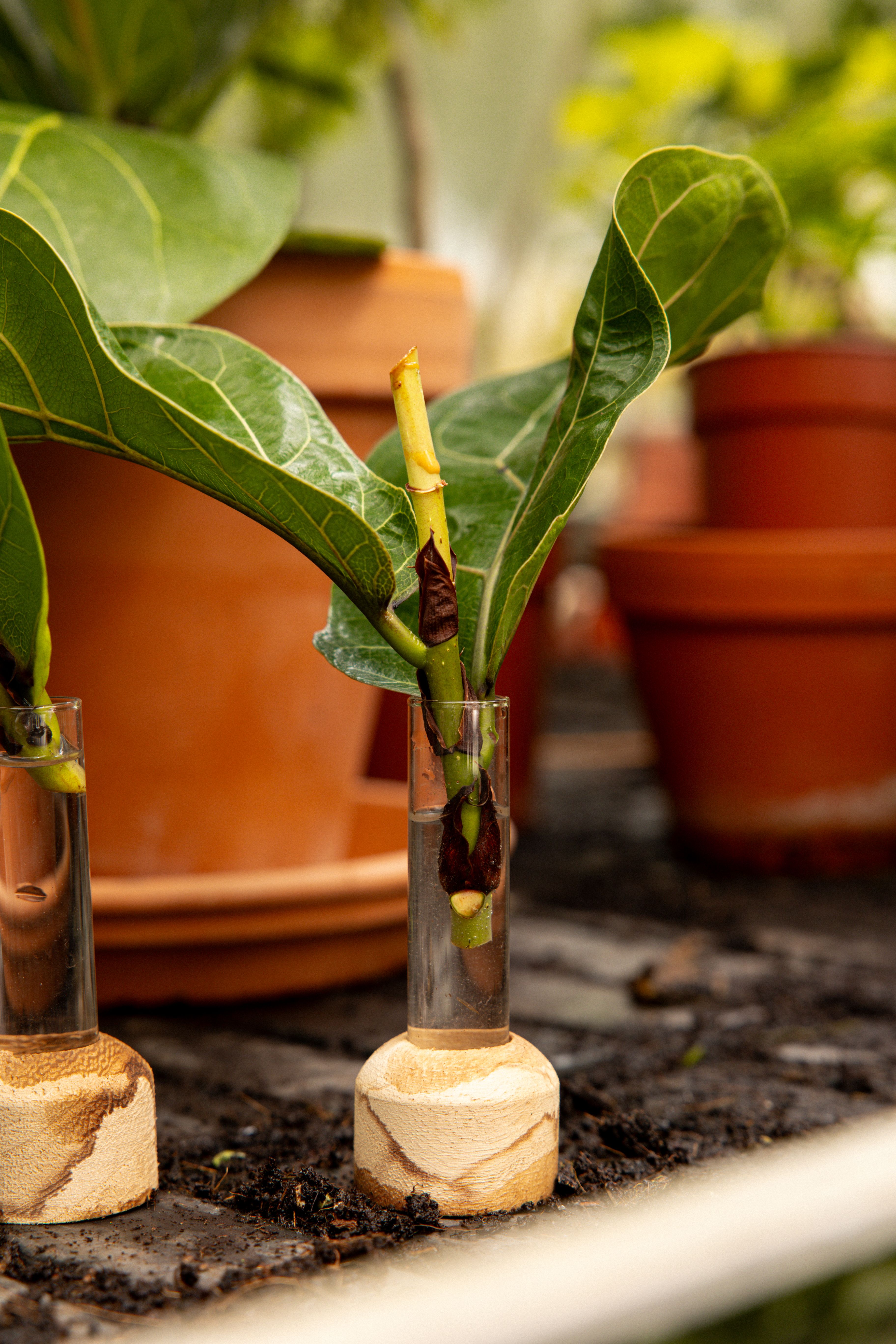
You can root your Ficus Lyrata cutting in water or directly in soil. If using water, place the node below the waterline and refresh the water regularly. If using soil, plant the node into a lightly moist, airy potting mix and keep the soil slightly damp, but never wet.
Step 5. Create warm, stable conditions
Place the cutting in bright, indirect light and keep it warm. Higher humidity can help the cutting root more successfully, so a propagation box or clear cover can be useful. Just make sure there is some airflow to prevent mould.
Step 6. Be patient
Ficus Lyrata cuttings can take several weeks to develop roots, so don’t worry if nothing happens right away. Once the roots are a few centimetres long, you can pot the cutting into fresh soil. Keep the conditions stable while your new plant adjusts to her new home.
Buy Ficus Lyrata
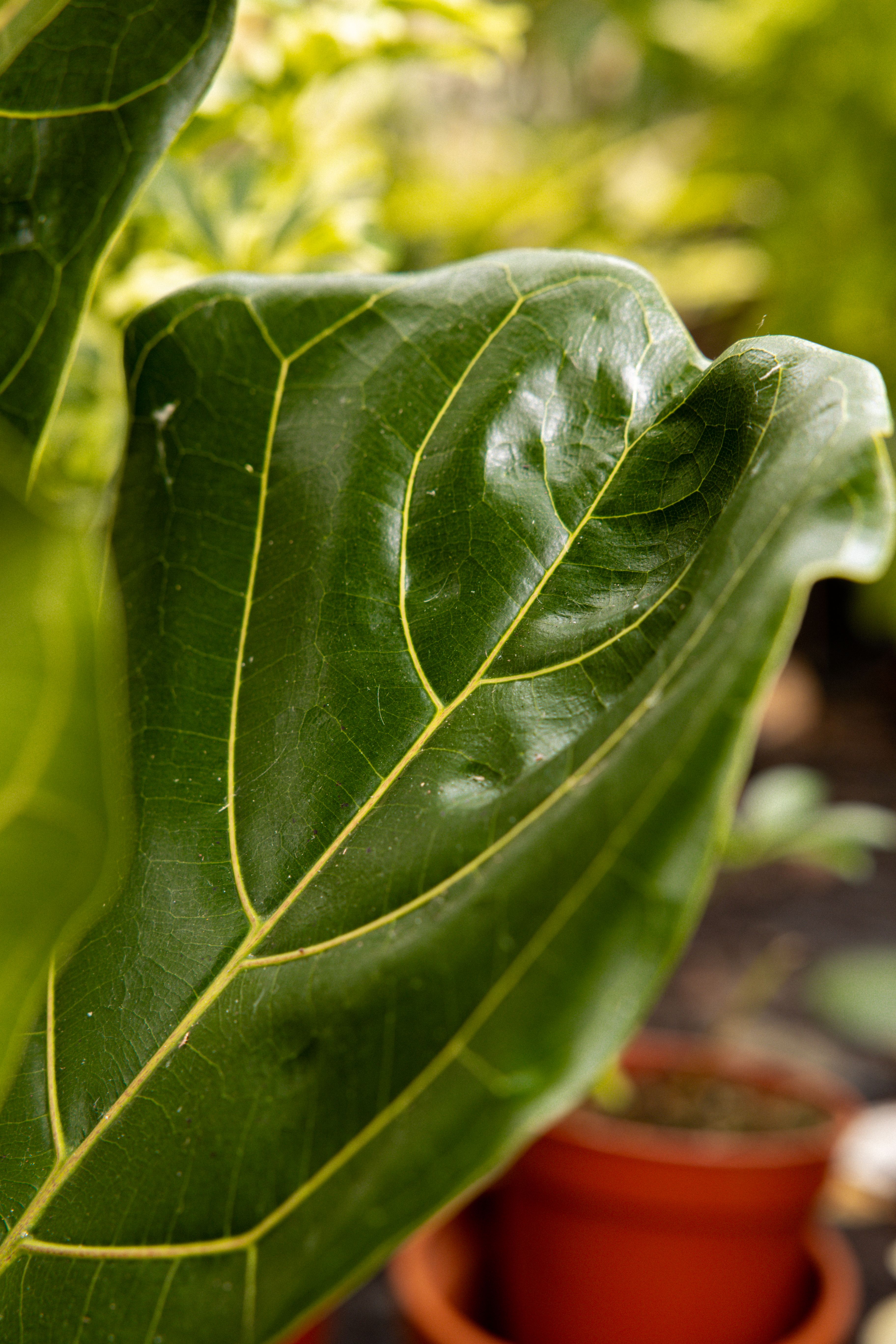

Looking for a bold indoor plant with large, glossy leaves? The Ficus Lyrata, also known as the Fiddle Leaf Fig, is perfect if you want to add instant greenery and height to your home. This iconic houseplant is loved for its sculptural shape, statement leaves and timeless look.
Order your Ficus Lyrata online and choose the size that fits your space, from a smaller plant you can watch grow to a larger Fiddle Leaf Fig that instantly transforms your room.
Is the Ficus Lyrata difficult to care for?
She can be a little particular, but she’s not impossible. The key is bright, indirect light, careful watering and a stable spot where she doesn’t experience too many changes.
Why is my Ficus Lyrata dropping leaves?
Leaf drop is often caused by stress, such as moving the plant, overwatering, underwatering, cold drafts or too little light. Check her conditions and try to keep her routine consistent.
Can the Ficus Lyrata tolerate direct sunlight?
She can handle some gentle morning or evening sun, but strong direct afternoon sunlight can scorch her leaves. Bright, indirect light is the safest choice.
Is the Ficus Lyrata pet-friendly?
No, the Ficus Lyrata is toxic to cats and dogs if ingested. It’s best to keep her out of reach of curious pets.
Why are the leaves of my Ficus Lyrata turning brown?
Brown spots or edges can be caused by inconsistent watering, dry air, root problems or too much direct sun. Check the soil, light and humidity to find out what she needs.
How do I keep the leaves of my Ficus Lyrata shiny?
Dust can build up on her large leaves, making it harder for her to absorb light. Gently wipe the leaves with a soft, damp cloth every now and then to keep them clean and glossy.
How fast does Ficus Lyrata grow indoors?
A Ficus Lyrata can grow quite quickly indoors when she receives enough bright, indirect light and consistent care. During spring and summer, she may produce several new leaves and grow noticeably taller. In lower light or during winter, her growth usually slows down.
Does Ficus Lyrata like misting?
Ficus Lyrata can enjoy a little extra humidity, but misting is not always enough to make a big difference. If the air in your home is very dry, a humidifier or grouping plants together is usually more effective. Always make sure the leaves dry properly to prevent marks or fungal issues.
Can I prune a Ficus Lyrata?
Yes, you can prune a Ficus Lyrata to control her height, encourage branching or remove damaged leaves. The best time to prune is in spring or early summer, when the plant is actively growing. Use clean, sharp scissors or pruning shears, and be careful with the milky sap, as it can irritate the skin.
How big can a Ficus Lyrata grow indoors?
Indoors, a Ficus Lyrata can grow into a beautiful statement plant of around 1.5 to 3 metres tall, depending on the space, light and care she receives. In ideal conditions, she can continue growing for many years. Regular pruning can help keep her at the size and shape you prefer.