In this article
- 1 How to Care for Dionaea (Venus Flytrap) – Expert tips for thriving plants
- 1.1 Dionaea care: 10 expert tips for growing it successfully
- 1.2 Dionaea care tips
- 1.2.1 Light requirements for Dionaea
- 1.2.2 Watering
- 1.2.3 Nutrition
- 1.2.4 Temperature & humidity
- 1.2.5 Soil & repotting
- 1.3 Propagating Dionaea
- 1.4 Most common pests on Dionaea
- 1.5 Is Dionaea poisonous for your pets or children?
- 1.6 Buy your new Dionaea online at PLNTS.com
How to Care for Dionaea (Venus Flytrap) – Expert tips for thriving plants
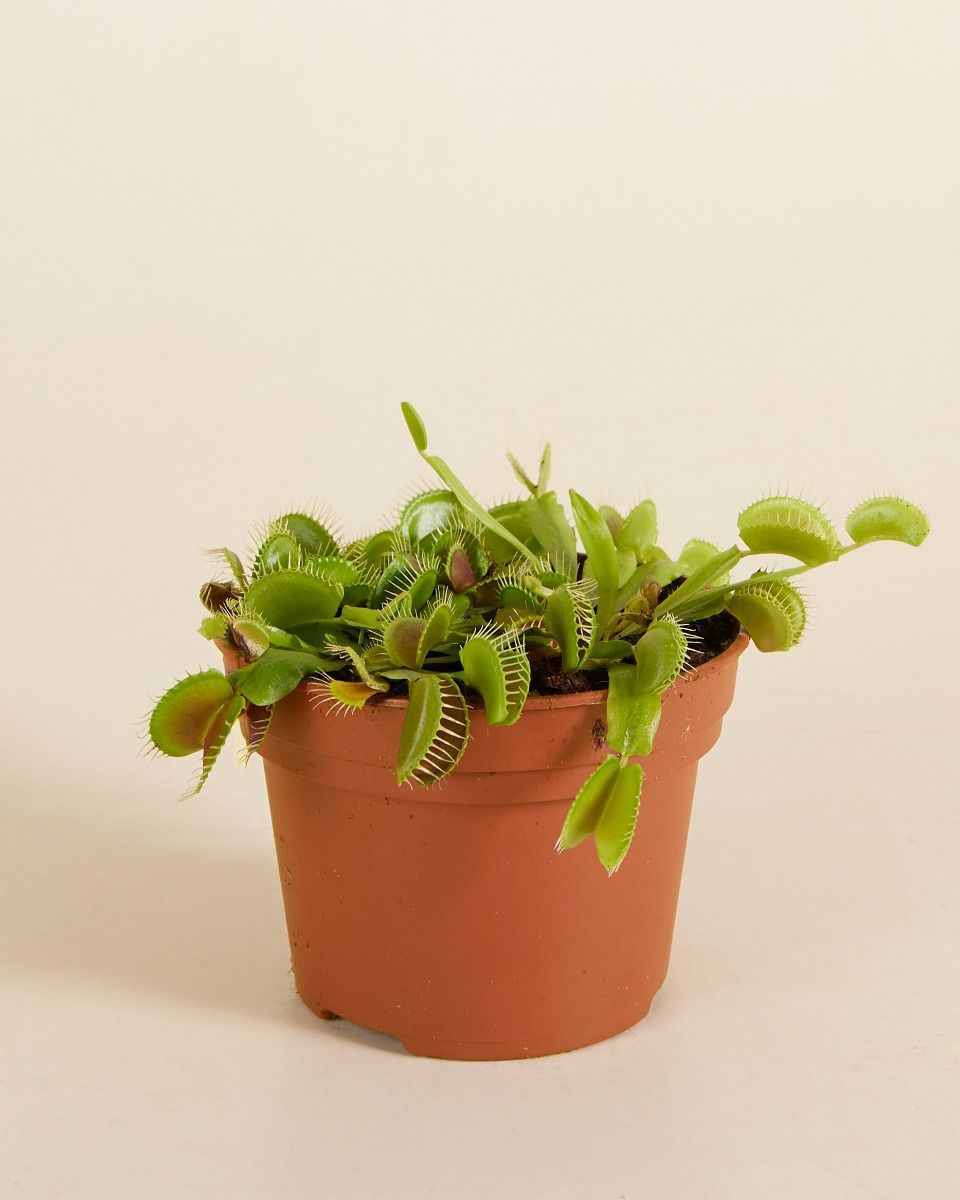
Dionaea muscipula, better known as the Venus Flytrap, is one of the most fascinating houseplants you can grow. Famous for its snapping traps that catch insects, this carnivorous plant adds a unique and playful touch to your plant collection.
Native to the wetlands of North and South Carolina in the United States, the Venus Flytrap grows naturally in nutrient-poor soils. Instead of relying on nutrients from the soil, it catches small insects with its specialised traps. With the right care, Dionaea muscipula can thrive indoors and continue to surprise you with its clever hunting mechanism.
Dionaea care: 10 expert tips for growing it successfully
- Place your Dionaea in a very bright spot with plenty of sunlight.
- A sunny windowsill with direct sunlight is ideal.
- Always keep the soil moist — Venus Flytraps dislike dry soil.
- Use distilled water, rainwater or demineralised water instead of tap water.
- Never fertilise your Venus Flytrap.
- Grow the plant in carnivorous plant soil, not regular potting soil.
- Avoid triggering the traps unnecessarily, as this costs the plant energy.
- Maintain temperatures between 18–30°C during the growing season.
- Expect a winter dormancy period where the plant slows down.
- Repot every 1–2 years to keep the soil fresh.
Dionaea care tips
Light requirements for Dionaea
Dionaea muscipula loves sunlight. Place your plant in a location where it receives several hours of direct sun each day. A bright south-facing windowsill is often the perfect spot.
Too little light can cause weak growth and small traps.
Expert tip! If your Venus Flytrap produces long, pale leaves without strong traps, it likely needs more sunlight.
Watering
Venus Flytraps grow naturally in boggy environments, so they prefer consistently moist soil. The easiest method is to keep the pot standing in a shallow tray of water.
Expert tip! Always use rainwater, distilled water or demineralised water. Tap water often contains minerals that can harm the plant over time.
Never allow the soil to dry out completely.
Nutrition
Unlike most houseplants, Dionaea does not require fertiliser. In fact, fertilising can damage the plant.
The plant receives nutrients by catching insects with its traps. If kept indoors where insects are scarce, the plant will still survive just fine as long as it receives enough light.
Expert tip! Avoid feeding the plant large insects or touching the traps too often, as this can stress the plant.
Temperature & humidity
Dionaea grows best in warm temperatures between 18–30°C during the growing season. It tolerates normal indoor humidity but also appreciates slightly higher humidity levels.
In winter, the plant naturally enters a dormancy period and prefers cooler temperatures.
Soil & repotting
Venus Flytraps require special carnivorous plant soil that is low in nutrients. A mixture of sphagnum moss and perlite works well.
Repot your Dionaea every 1–2 years to refresh the soil and give the roots space to grow. The best time to repot is early spring before the active growing season begins.
Propagating Dionaea
Dionaea muscipula can be propagated by division when repotting or by leaf cuttings.
Here’s how to do it:
- Carefully remove the plant from its pot.
- Look for smaller growth points connected to the main plant.
- Gently separate these divisions, making sure each section has roots.
- Plant the divisions in fresh carnivorous plant soil.
- Keep the soil moist and place the plants in bright light while they establish.
With the right conditions, new Venus Flytrap plants will start growing from these divisions.
Most common pests on Dionaea
Although Dionaea catches insects, it can still suffer from pests such as aphids, fungus gnats or spider mites.
Regularly check the leaves and traps for signs of pests. Good airflow and proper watering help prevent most problems.
Is Dionaea poisonous for your pets or children?
Dionaea muscipula is generally considered non-toxic to pets and humans. However, it’s best not to allow pets or children to play with the traps, as repeated triggering can weaken the plant.
Buy your new Dionaea online at PLNTS.com
Looking for a fascinating carnivorous plant? At PLNTS.com you can buy Dionaea muscipula online and add a truly unique plant to your collection.
Whether you’re a beginner or a curious plant lover, the Venus Flytrap is sure to impress with its incredible traps and unusual growing style.