In this article
- 1 How to Care for Clusia (Autograph Tree) – Expert tips for thriving plants
- 1.1 Clusia care: 10 expert tips for growing it successfully
- 1.2 Clusia care tips
- 1.2.1 Light requirements for Clusia
- 1.2.2 Watering
- 1.2.3 Nutrition
- 1.2.4 Temperature & humidity
- 1.2.5 Soil & repotting
- 1.3 Propagating Clusia
- 1.4 Most common pests on Clusia
- 1.5 Is Clusia poisonous for your pets or children?
- 1.6 Buy your new Clusia online at PLNTS.com
How to Care for Clusia (Autograph Tree) – Expert tips for thriving plants
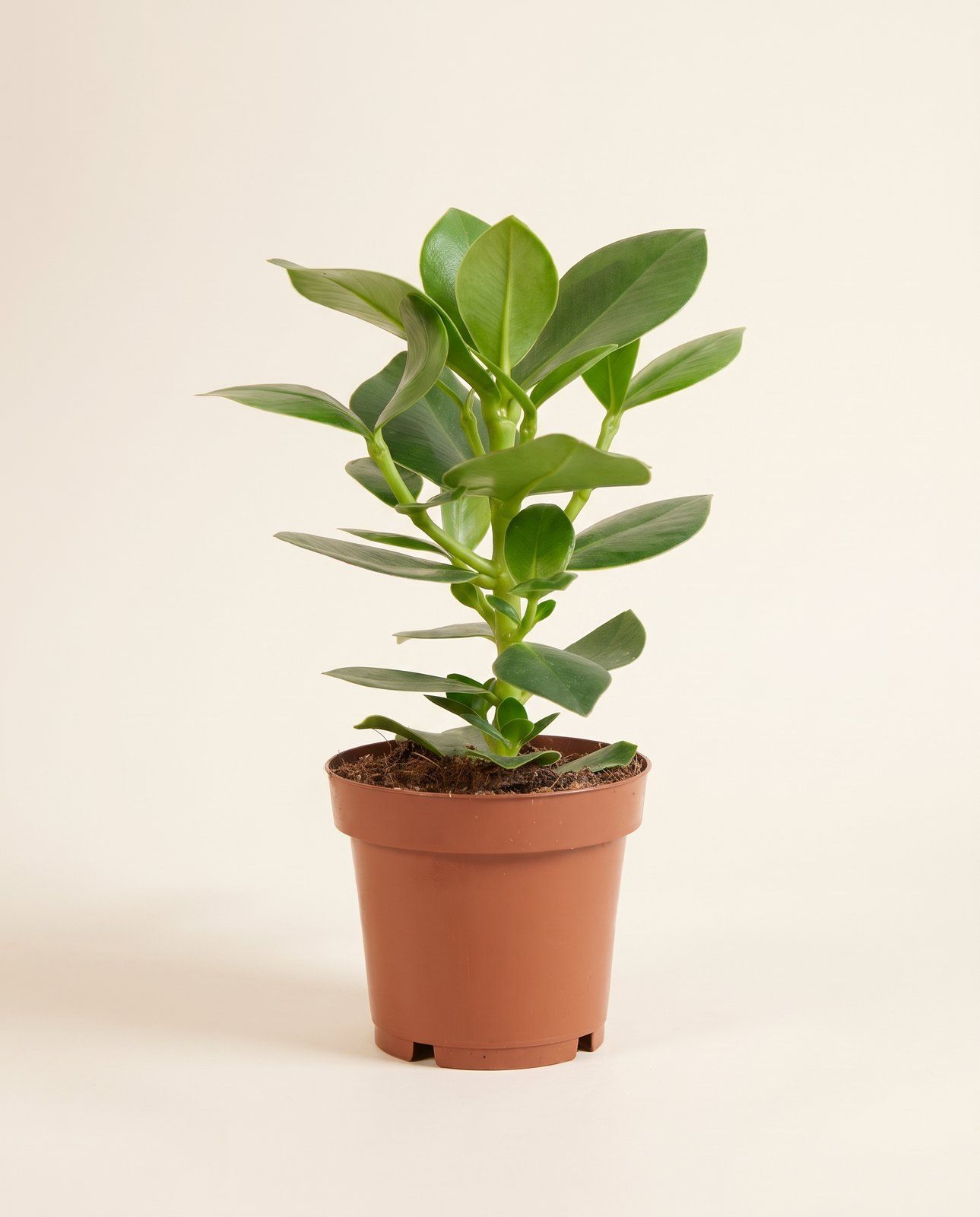
Clusia rosea is nicknamed the Autograph Tree, because you can scratch a name into its thick, leathery leaves and it stays visible for as long as the leaf lives. Its round, glossy, dark green leaves grow in neat pairs and give the plant a fresh, compact and slightly succulent look. The popular variety 'Princess' stays nice and compact, which makes it perfect for a windowsill, desk or side table.
Clusia comes from the warm Caribbean and tropical Central America, where it grows in bright spots and sometimes even on other trees. It stores water in its thick leaves, so it easily forgives a forgotten watering.
Clusia care: 10 expert tips for growing it successfully
- Give your Clusia a bright spot; a little morning or evening sun is fine.
- Avoid harsh midday sun behind glass in summer.
- Let the top layer of soil dry out before watering.
- Never leave water standing in the pot.
- Water less in autumn and winter.
- Keep temperatures between 15–28°C, never below 12°C.
- Feed once a month in spring and summer.
- Dust the leaves now and then with a damp cloth.
- Use airy, well-draining houseplant soil.
- Repot every two to three years in spring.
Clusia care tips
Light requirements for Clusia
Clusia loves light. A spot near an east- or west-facing window is ideal, and a little direct morning or evening sun helps it stay compact. It can also handle bright indirect light further into the room, but it will grow more slowly and become a bit leggier.
Expert tip! Leaves that stretch towards the window or grow far apart on the stem mean your Clusia needs more light. Turn the pot every few weeks for even growth.
Watering
Thanks to its thick leaves, Clusia can store water and doesn't like soggy soil. Water when the top few centimetres of soil feel dry, then let excess water drain away. In spring and summer that is roughly once a week; in winter once every two to three weeks.
Expert tip! Yellow leaves that drop suddenly usually mean too much water. Wrinkled or curling leaves mean your plant is thirsty.
Nutrition
Feed your Clusia once a month in spring and summer with a diluted houseplant food. Stop feeding in autumn and winter.
Temperature & humidity
Clusia feels best at normal room temperature between 15 and 28°C. Keep it away from cold draughts and never let the temperature drop below 12°C. It copes well with normal indoor humidity, so no misting is needed.
Soil & repotting
Use an airy, well-draining mix, such as houseplant soil with some perlite or orchid bark. Repot every two to three years in spring, in a pot that is just slightly bigger and has a drainage hole.
Propagating Clusia
Clusia can be propagated from stem cuttings, although it takes some patience.
Here's how to do it:
- In spring or summer, cut a healthy stem tip of 10–15 cm just below a leaf node.
- Remove the lower pair of leaves.
- Let the cut dry for a few hours.
- Place the cutting in moist cutting soil or a mix of soil and perlite.
- Keep it warm (around 22–25°C) and bright, and cover it loosely with a plastic bag to keep the humidity up.
Roots usually form within four to eight weeks.
Most common pests on Clusia
Clusia is quite resistant, but it can occasionally get mealybugs or scale insects. Check the leaf axils and the undersides of the leaves regularly and wipe away any pests with a cloth or cotton bud dipped in soapy water.
Is Clusia poisonous for your pets or children?
The sap of Clusia is considered mildly toxic if eaten and can irritate the mouth and stomach. Place your plant out of reach of pets and children to be on the safe side.
Buy your new Clusia online at PLNTS.com
Looking for a fresh, easy plant with a compact shape? At PLNTS.com you can buy Clusia 'Princess' online.
With its glossy round leaves and easy-going nature, it is a great choice for both beginners and experienced plant lovers!