In this article
- 1 How to Care for Ledebouria (Silver Squill) – Expert tips for thriving plants
- 1.1 Ledebouria care: 10 expert tips for growing it successfully
- 1.2 Ledebouria care tips
- 1.2.1 Light requirements for Ledebouria
- 1.2.2 Watering
- 1.2.3 Nutrition
- 1.2.4 Temperature & humidity
- 1.2.5 Soil & repotting
- 1.3 Propagating Ledebouria
- 1.4 Most common pests on Ledebouria
- 1.5 Is Ledebouria poisonous for your pets or children?
- 1.6 Buy your new Ledebouria online at PLNTS.com
How to Care for Ledebouria (Silver Squill) – Expert tips for thriving plants
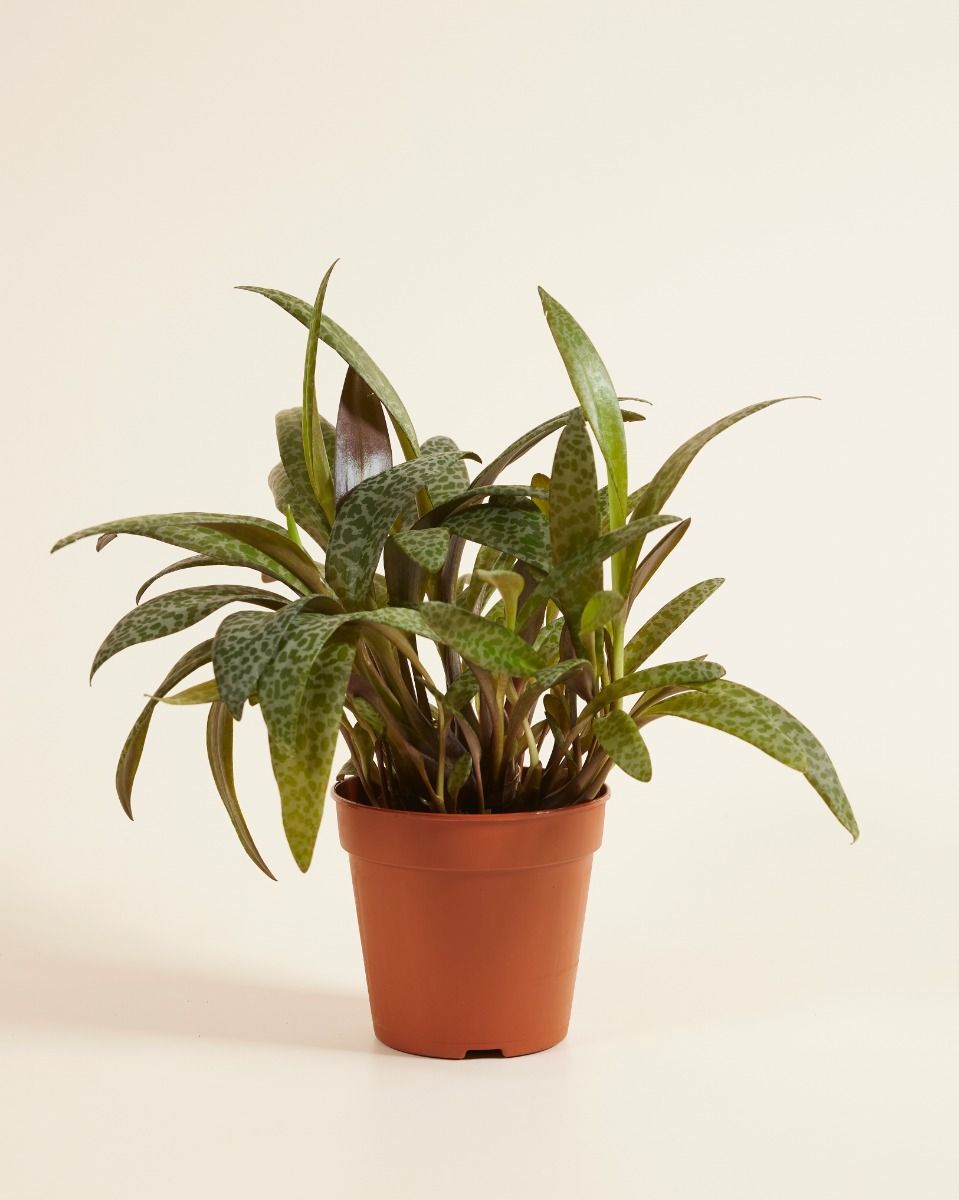
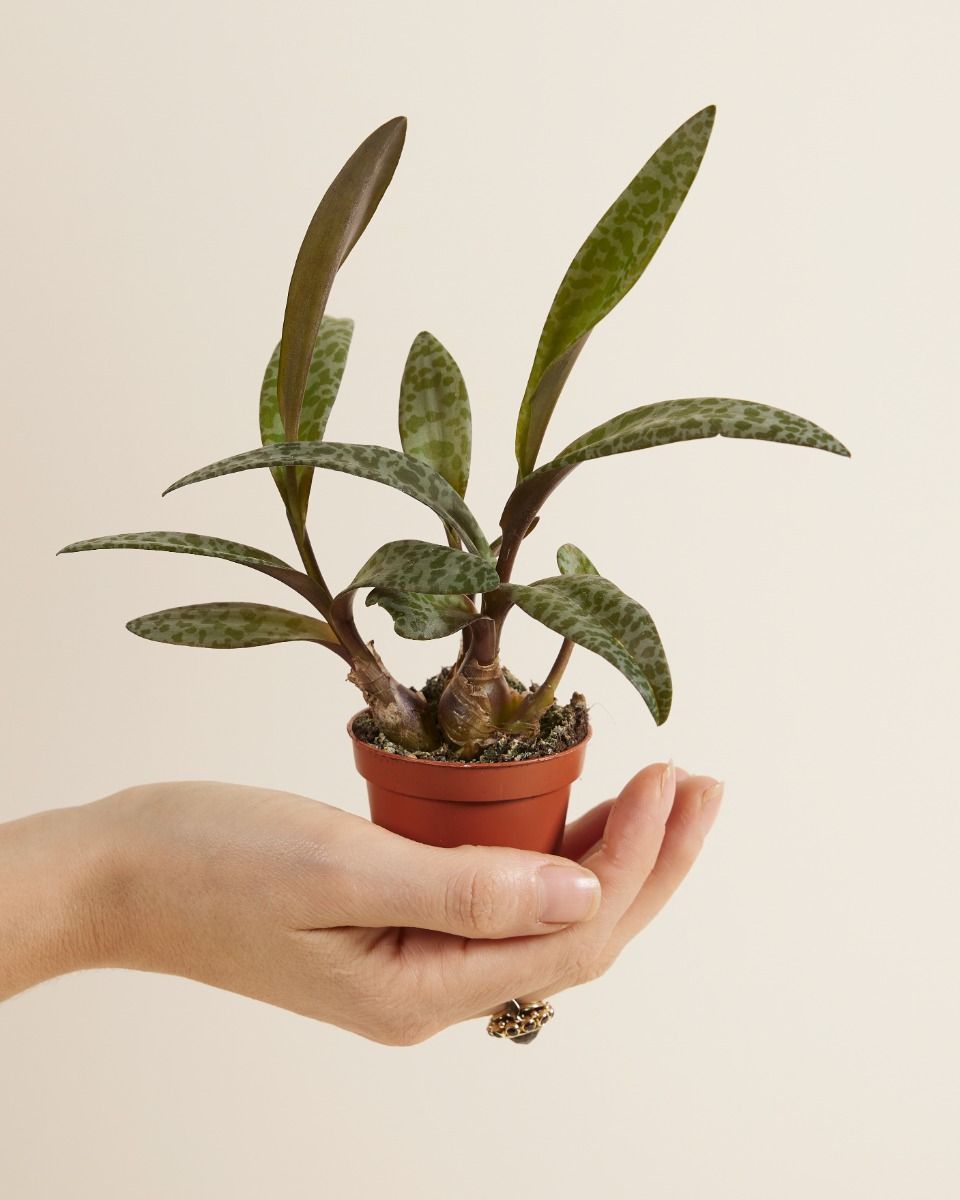
Ledebouria socialis, better known as the Silver Squill, is a small bulbous plant with leaves that look hand-painted: a silvery-green base covered in dark green spots, with a purple underside. The bulbs grow partly above the soil and multiply quickly, so one plant slowly turns into a cheerful little colony. In spring it surprises you with clusters of tiny greenish-white flowers on purple stalks.
Ledebouria comes from the dry savannahs of South Africa. It stores water in its bulbs, which is why it is often grouped with succulents. That makes it a forgiving plant that handles a forgotten watering without complaint.
Ledebouria care: 10 expert tips for growing it successfully
- Place your Ledebouria in bright light; some morning sun is fine.
- Let the soil dry out between waterings.
- Water less in winter, when the plant rests.
- Use a gritty, well-draining soil such as a cactus mix.
- Plant the bulbs with their upper half above the soil.
- Keep temperatures between 15–27°C and never below 10°C.
- Feed once a month in spring and summer at half strength.
- Choose a pot with a drainage hole.
- Repot when the bulbs fill the pot.
- Turn the pot now and then for even growth.
Ledebouria care tips
Light requirements for Ledebouria
Ledebouria loves bright light. A windowsill facing east or west is ideal; gentle morning or evening sun brings out the spotted pattern and the purple undersides. Strong midday sun behind glass can scorch the leaves.
Expert tip! Long, floppy leaves with faded spots mean the plant needs more light.
Watering
Water when the soil has dried out almost completely, and let excess water drain away. In winter, the plant needs very little water. Too much water is the most common cause of problems, because the bulbs rot easily.
Expert tip! Soft or mushy bulbs are a sign of overwatering. Let the soil dry out fully and water less often from now on.
Nutrition
Give your Ledebouria cactus or houseplant food at half strength once a month in spring and summer. No feeding is needed in autumn and winter.
Temperature & humidity
Ledebouria does well at normal room temperatures between 15–27°C and is happy with average room humidity. Keep it above 10°C. A slightly cooler, bright spot in winter supports a natural rest period.
Soil & repotting
Use a gritty, well-draining mix, such as cactus soil with extra perlite or grit. Plant the bulbs so that their upper half stays above the soil. Repot in spring when the bulbs fill the pot; Ledebouria flowers best when it is a little crowded.
Propagating Ledebouria
Ledebouria is very easy to propagate by separating the offset bulbs.
Here's how to do it:
- Remove the plant from its pot in spring.
- Gently pull apart the bulbs that have formed around the mother bulb.
- Make sure each bulb has some roots.
- Plant the bulbs in gritty soil with their upper half above the surface.
- Wait a few days before watering, then water sparingly.
Most common pests on Ledebouria
Ledebouria is rarely bothered by pests. Occasionally mealybugs settle between the bulbs and leaves. Remove them with a cotton swab dipped in soapy water.
Is Ledebouria poisonous for your pets or children?
The bulbs of Ledebouria are considered toxic if eaten. Keep your Silver Squill out of reach of pets and children.
Buy your new Ledebouria online at PLNTS.com
Looking for a cute, low-maintenance plant with a unique pattern? At PLNTS.com you can buy Ledebouria Socialis online, as a medium plant or as a baby plant.
With its spotted leaves and quickly multiplying bulbs, the Silver Squill is a great plant for beginners and collectors alike.