In this article
- 1 How to Care for Bromeliads – Expert tips for thriving plants
- 1.1 Bromeliad care: 10 expert tips for growing them successfully
- 1.2 Bromeliad care tips
- 1.2.1 Light requirements for bromeliads
- 1.2.2 Watering
- 1.2.3 Nutrition
- 1.2.4 Temperature & humidity
- 1.2.5 Soil & repotting
- 1.3 Propagating bromeliads
- 1.4 Most common pests on bromeliads
- 1.5 Are bromeliads poisonous for your pets or children?
- 1.6 Buy your new bromeliad online at PLNTS.com
How to Care for Bromeliads – Expert tips for thriving plants
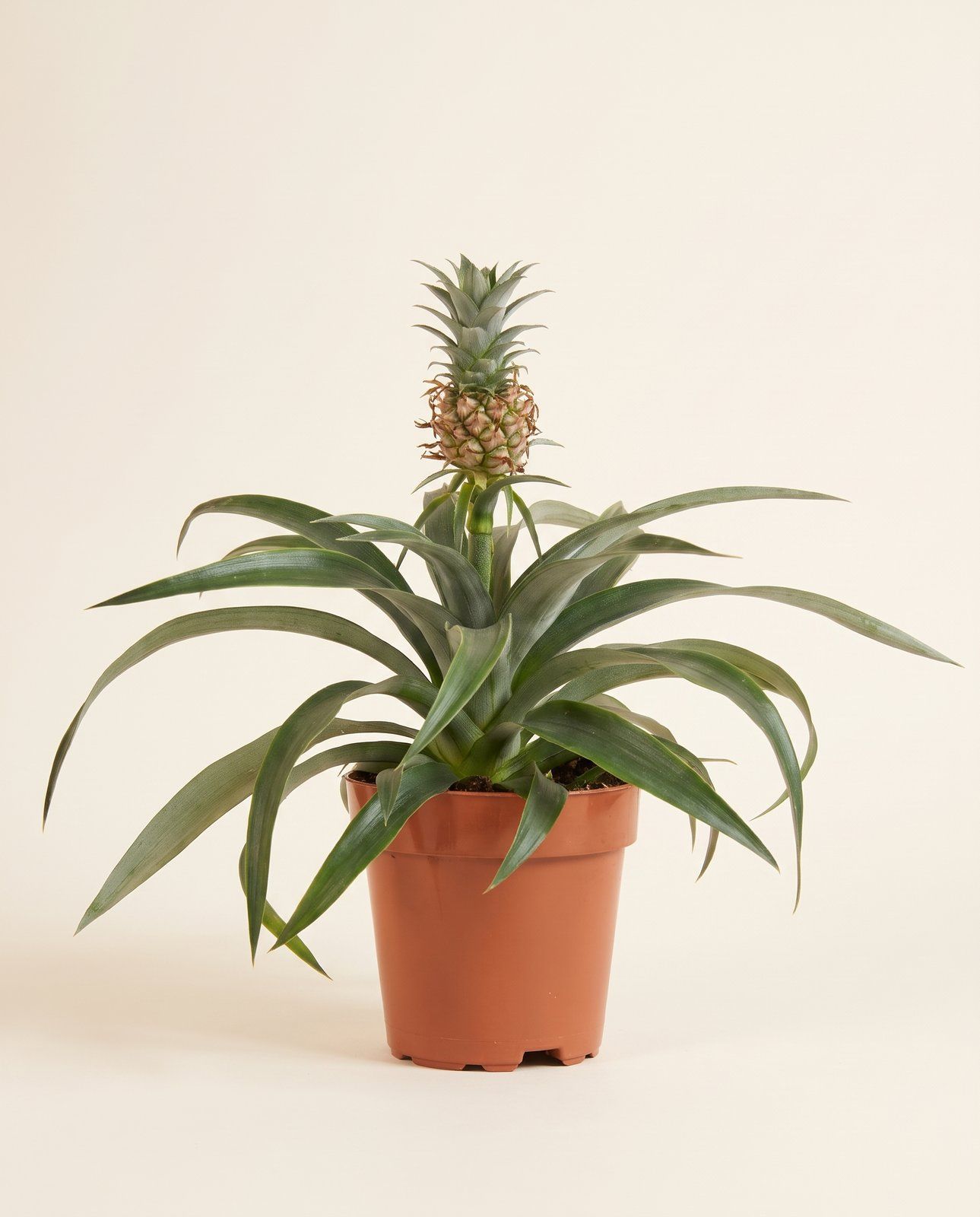
Bromeliads (Bromeliaceae) are a colourful plant family from tropical Central and South America. Their stiff leaves grow in a rosette, often around a central 'cup', and many species produce a striking flower or coloured bract that lasts for months. The family includes the Guzmania, Vriesea, Aechmea, the Air plant (Tillandsia) and even the pineapple. The ornamental pineapple (Ananas comosus) 'Amigo' grows a real mini pineapple on top of its rosette – a guaranteed conversation starter!
Many bromeliads grow on trees in the wild and collect water and nutrients in their leaf rosette. That makes their care a little different from most houseplants: less water in the soil, a bit more attention to the rosette.
Looking for Air plant care? Read our Tillandsia care guide.
Bromeliad care: 10 expert tips for growing them successfully
- Place your bromeliad in bright, indirect light.
- Ornamental pineapples can handle some direct morning or evening sun.
- Let the soil dry out slightly between waterings.
- For cup-forming bromeliads, keep a little water in the central rosette.
- Use rainwater or water at room temperature.
- Refresh the water in the rosette every one to two weeks.
- Keep temperatures between 18–27°C, never below 15°C.
- Feed sparingly: once a month in spring and summer at half strength.
- Use a light, airy soil mix, such as orchid or bromeliad soil.
- After flowering, grow on the young offsets (pups).
Bromeliad care tips
Light requirements for bromeliads
Bromeliads like plenty of light, but not harsh midday sun, which can scorch the leaves. A spot near an east- or west-facing window is ideal. The ornamental pineapple is a real sun lover and develops the best colour and fruit with a few hours of gentle direct sun.
Expert tip! Faded leaf colours and a weak flower or fruit usually mean too little light.
Watering
Bromeliads have small root systems and hate soggy soil. Water when the top few centimetres of soil are dry, and always let excess water drain away. Species with a central cup, like Guzmania and Vriesea, also like a little water in the rosette; empty and refresh it every one to two weeks so it doesn't go stale. The ornamental pineapple doesn't form a real cup, so just water the soil.
In winter, water less and keep the rosette almost dry if your home is cool.
Expert tip! Use rainwater or filtered water. Hard tap water leaves white limescale spots on the leaves.
Nutrition
Bromeliads need very little food. Give them a liquid houseplant food at half strength once a month in spring and summer, poured onto the soil.
Temperature & humidity
Bromeliads feel at home at 18–27°C and should never get colder than 15°C. They like slightly higher humidity: place them on a tray with water and pebbles or mist the leaves now and then, especially in winter when the heating is on.
Soil & repotting
Use a light, airy and well-draining mix, such as orchid soil or a mix of houseplant soil with bark and perlite. Bromeliads have small roots, so a small pot is enough and they rarely need repotting.
Propagating bromeliads
Most bromeliads flower only once. Don't worry: after flowering, the mother plant slowly dies back while producing young offsets (pups) at its base. The ornamental pineapple also produces a leafy crown on top of the fruit.
Here's how to propagate:
- Wait until the pups are about one third of the size of the mother plant.
- Cut them off close to the mother plant with a clean, sharp knife, ideally with a few roots attached.
- Plant each pup in its own small pot with airy bromeliad or orchid soil.
- Keep them warm and bright, and water sparingly until they start growing.
With patience, a pup will flower itself after two to three years.
Most common pests on bromeliads
Bromeliads are fairly resistant, but can occasionally get scale insects or mealybugs at the base of the leaves. Check your plant regularly and remove pests with a cotton bud dipped in soapy water. Rot from soil that stays too wet is a bigger risk than pests.
Are bromeliads poisonous for your pets or children?
Good news: bromeliads, including the ornamental pineapple, are considered non-toxic to cats, dogs and people. Do watch out for the sharp, sometimes serrated leaf edges of the pineapple, and keep the decorative fruit out of reach – it is not meant for eating.
Buy your new bromeliad online at PLNTS.com
Looking for a cheerful plant that is sure to surprise? At PLNTS.com you can buy the Ornamental Pineapple 'Amigo' online, complete with its own mini pineapple.
A tropical eye-catcher that brings instant holiday vibes into your home!